Meal kits: analyzing business models and market trends
1
Think about these questions before watching. Share your ideas with a partner.
- Considering your own weekly routine, what factors are most important when deciding what to eat for dinner: convenience, cost, variety, or healthiness? Describe a situation where you had to prioritize one over the others.
- Many companies today rely on a subscription model. Thinking about services like meal kits or streaming platforms, what makes a subscription valuable enough for you to keep paying for it long-term?
- Imagine you were designing a new food service to compete with both traditional grocery stores and meal kits. What unique features or benefits would your service offer to attract and retain customers?
2
Watch the video from 3:15 to 7:00. Pay attention to the main ideas, key vocabulary, and examples in this section.
3
Answer these questions in your own words. Support your answers with evidence from the video.
01According to the video, what is the main problem with attracting customers using severe discounts?
Sample answerThe main issue is that once the promotional period ends, customers might not think the service is worth the new, full price. They get used to the low price and don't want to pay more.
02In what way has the convenience offered by meal kits become less unique over time?
Sample answerIt's become less unique because now restaurants and grocery stores also offer delivery directly to your door. This means meal kits are no longer the only convenient option for getting food at home.
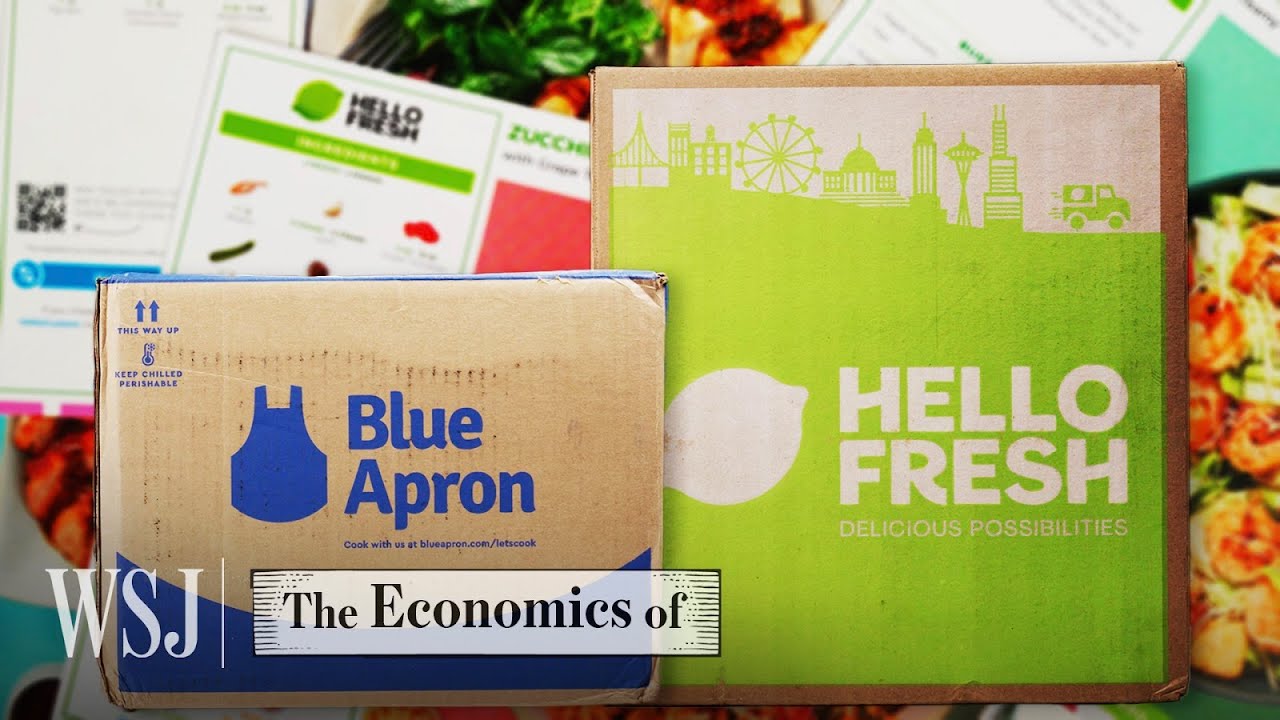
03How did the business performance of HelloFresh and Blue Apron compare after they both went public in 2017?
Sample answerTheir paths were very different. HelloFresh saw constant growth in revenue and has been consistently profitable. In contrast, Blue Apron's revenue slowly declined and it faced major financial trouble, even being threatened with delisting from the stock exchange.
04Why does a company like Methodology target a very specific, high-income audience?
Sample answerIt seems they do this to stand out in a crowded market. They offer a premium, pre-made meal service with unique ingredients for people who are 'time-starved' and can afford to pay for that level of convenience and quality, which differentiates them from cheaper, cook-it-yourself kits.
4
Vocabulary
Vocabulary
These expressions will help you communicate more naturally about this topic.
Examples
To gain a competitive edge — to achieve an advantage over other companies or products in the market.
This is a common business collocation. You can gain an edge through something (e.g., better technology) or over a rival.
A saturated market — a market where there are already too many businesses or products, making it difficult for new ones to be successful.
Often used with verbs like 'enter' or 'compete in'. For example: 'It's hard for new meal kit companies to enter such a saturated market.'
To cater to a specific demographic — to provide products or services designed for a particular group of people (e.g., based on age, income, or lifestyle).
'Cater to' is a useful phrasal verb. A 'demographic' is a more formal term for a group of customers. You can also 'target' a specific demographic.
To weigh up the pros and cons — to carefully consider the advantages and disadvantages of something before making a decision.
This is a great phrase for discussions. For example: 'A customer might weigh up the pros and cons of convenience versus cost.'
A flash in the pan — an idiom for something that is popular or successful for only a very short time and is not repeated.
Use this to describe trends or businesses that you think won't have long-term success. For example: 'Was the initial excitement just a flash in the pan?'
5
Decide if each statement is true or false. Correct the false ones.
01Since going public in 2017, both HelloFresh and Blue Apron have experienced consistent growth in revenue.
02According to the video, it is relatively easy to start a meal kit company, but it is very difficult to grow it into a large, successful business.
03The convenience offered by meal kit companies has become less of a unique advantage because grocery stores and restaurants now also provide delivery services.
04To increase customer choice and retention, many meal kit companies are now offering options that are not traditional meal kits, such as pre-made meals.
05Methodology is a company that differentiates itself by offering meal kits with unusual ingredients like cacti for a high-income audience.
6
Complete the sentences with words from the box. One word is extra.
Word bank
01To gain a competitive , many companies are now offering pre-made meals in addition to their standard kits.
02With so many similar services available, the meal kit industry has become a highly market, making it difficult for new companies to succeed.
03Some meal kit services try to to specific dietary needs, such as vegan or gluten-free, to attract a niche audience.
04Before subscribing, consumers should carefully the pros and cons, considering factors like cost, convenience, and food waste.
05Many analysts wondered if the initial boom in meal kits was just a in the pan, or if the trend would have long-term staying power.
7
Choose the best answer based on what you heard in the video.
01What strategic change did Blue Apron make in response to its financial difficulties?
02According to the video, why has it been difficult for other companies to disrupt HelloFresh's market position?
03What is the stated benefit of companies expanding their assortment and giving customers more choice?
04Which of the following is NOT mentioned in the video as a strategy for meal kit companies to succeed or differentiate themselves?
8
The Economics of Meal Kits: Key Terms
Test your understanding of vocabulary and concepts related to the meal kit industry.
Match each item on the left with the correct item on the right.
A
B
9
Discuss these questions with a partner. Try to use vocabulary from the lesson.
- The video mentions a 90% cancellation rate for meal kits. Do you think this business model is just a flash in the pan, or can it be sustainable long-term? What would a company need to do to gain a competitive edge over traditional grocery shopping?
- In your country, is the meal kit market saturated, or is there still room for growth? If a new company wanted to succeed, what specific demographic should it cater to, and how could it convince them of its value?
- After weighing up the pros and cons of both options, which do you believe offers better overall value to the average consumer: meal kits or grocery shopping? Consider factors beyond just price, such as food waste, skill development in cooking, and dietary variety.