Sleep science: discussing cause and effect
1
Think about these questions before watching. Share your ideas with a partner.
- Describe your typical daily routine when it comes to drinks like coffee, tea, or energy drinks. How do you think these habits affect your productivity and mood?
- Think about the last time you had a really poor night's sleep. What factors do you believe contributed to it, and how did it impact your following day?
- What are some popular beliefs in your culture about how certain foods or drinks can affect sleep or energy? Do you personally agree or disagree with them based on your experience?
2
Watch the video carefully. Pay attention to the main ideas and key details.
3
Answer these questions in your own words. Support your answers with evidence from the video.
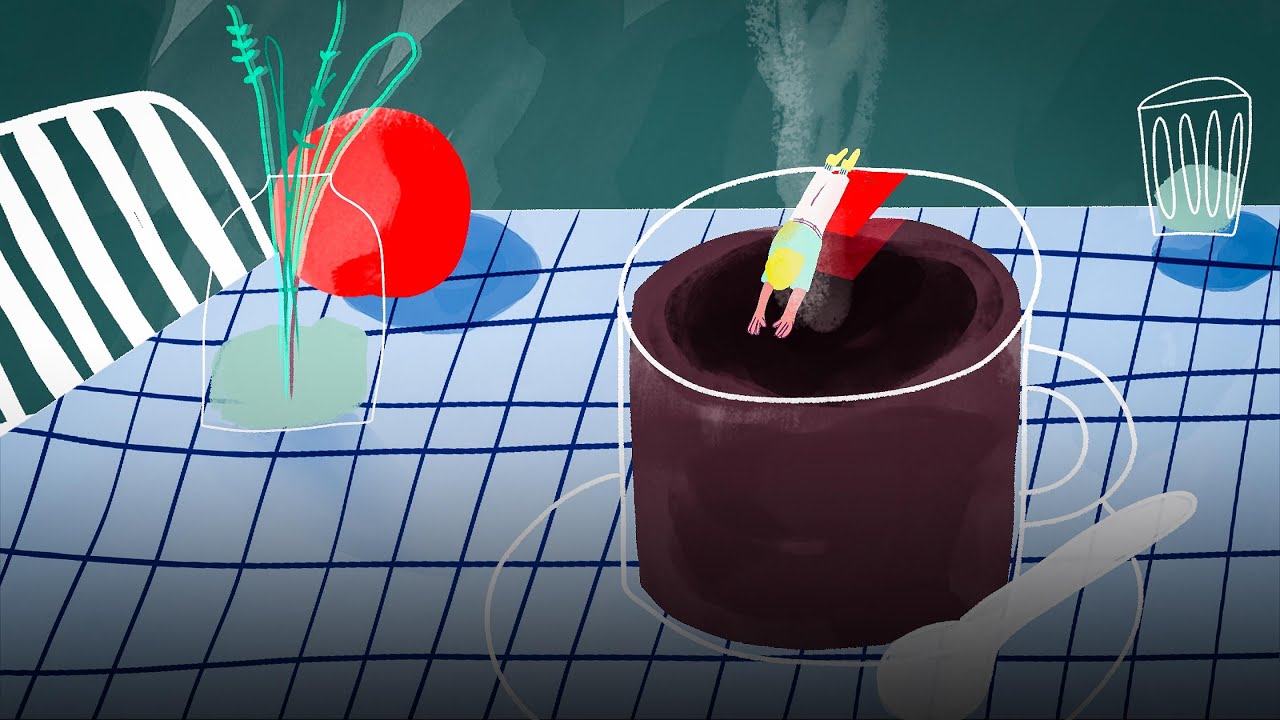
01According to the video, how can a cup of coffee consumed in the afternoon affect your sleep later that night?
Sample answerThe video explains that caffeine has a long 'half-life' of about five or six hours. This means if you have coffee at 2 PM, a quarter of the caffeine could still be in your brain at midnight, making it difficult to fall asleep properly.
02Why might someone who drinks coffee in the evening believe it doesn't affect their sleep, even when it actually does?
Sample answerThey might think it's fine because they can still fall asleep and stay asleep without waking up. However, the video says caffeine reduces the amount of deep, restorative sleep. So, they wake up feeling tired without realizing why and don't connect it to the coffee they had.
03In what way is the sedation caused by alcohol different from natural deep sleep?
Sample answerThe speaker explains that sedation from alcohol just switches off the brain's cells. Natural deep sleep is very different because it involves hundreds of thousands of brain cells firing together and then going silent in a coordinated way, creating powerful brainwaves.
04What are the three main problems with alcohol that the video identifies as being harmful to sleep?
Sample answerFirst, it causes sedation, which isn't the same as natural sleep. Second, it fragments your sleep by waking you up more often. And third, it can block your REM or dream sleep, which is important for emotional health.
4
Vocabulary
Vocabulary
These expressions will help you communicate more naturally about this topic.
Examples
To be wired — to be unusually energetic, alert, or tense, often from consuming a stimulant like caffeine.
Usage note: This is an informal idiom. You can say 'I'm feeling really wired' or 'That coffee has me completely wired'.
To wear off — for the effects of something (like medicine, a drink, or a feeling) to gradually decrease and disappear.
Usage note: This is a common phrasal verb. For example, 'I need another coffee; the effects of the first one are starting to wear off'.
To toss and turn — to move around restlessly in bed because you are unable to sleep.
Usage note: This idiom vividly describes a difficult night. You might say, 'I was tossing and turning all night and feel exhausted today'.
A light sleeper — a person who is easily woken up by noise or other disturbances.
Usage note: The opposite is 'a heavy sleeper'. This is a useful collocation to describe your sleep habits, e.g., 'My partner is such a light sleeper that I have to be silent in the morning'.
To knock someone out — to cause someone to fall asleep very quickly and deeply.
Usage note: This is informal and often refers to the strong effect of medicine or alcohol. It implies an unnatural, heavy sleep, which connects to the video's point about alcohol. Example: 'One glass of wine is enough to knock me out'.
5
Decide if each statement is true or false. Correct the false ones.
01According to the video, a cup of coffee you drink in the early afternoon can still be affecting you at midnight.
02Alcohol can interfere with dream sleep, also known as REM sleep, which is important for mental health.
03The video states that caffeine is a sedative drug that helps people relax.
04Even if you can fall asleep easily after drinking coffee, it can still reduce the amount of deep, restorative sleep you get.
05Alcohol fragments sleep because it calms the nervous system completely throughout the night.
6
Discuss these questions with a partner. Try to use vocabulary from the lesson.
- In many cultures, business meetings or social gatherings in the afternoon or evening involve coffee. After watching the video, do you think this is a problematic tradition? Discuss the social benefits versus the potential impact on sleep, especially considering how long it takes for caffeine's effects to wear off.
- Some people argue that adults should be responsible for their own caffeine intake, while others believe companies and cafes should do more to warn customers about the risks of late-day consumption. What is your stance? Is this a matter of personal choice or corporate responsibility?
- The video explains that even if you fall asleep easily after drinking caffeine, it can reduce your deep sleep. How might this information change your own habits, especially if you are a light sleeper or find yourself tossing and turning at night?