Digital communication: comparing synchronous and asynchronous styles
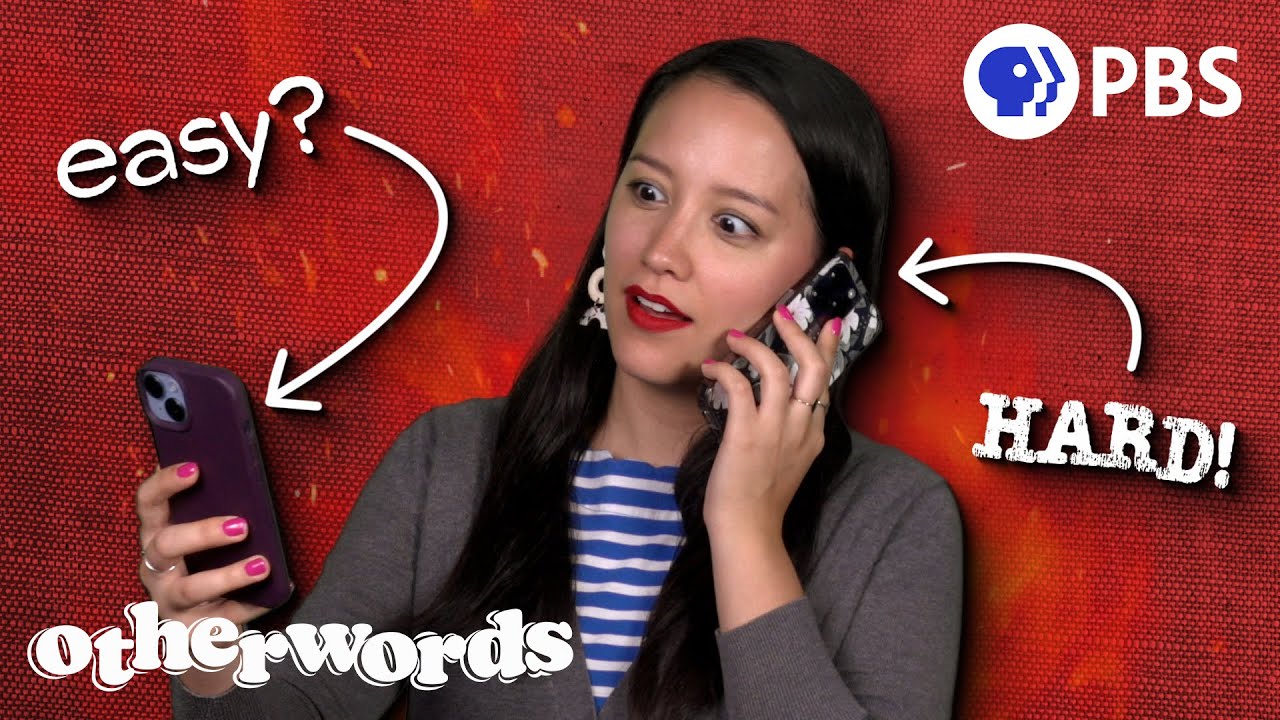
1
Think about these questions before watching. Share your ideas with a partner.
- In what kinds of situations do you prefer to communicate in real-time (like a phone call), and when do you opt for methods with a time delay, such as email or text messages? Explain your reasoning.
- Describe a time when a written message you sent or received was misinterpreted due to a lack of tone. What strategies do you now use to make your intended meaning and emotion clearer in digital communication?
- How do your communication choices differ between your professional/academic life and your personal life? Discuss the 'unwritten rules' you follow for things like response times, formality, and the use of emojis in each context.
2
Watch the video carefully. Pay attention to the main ideas and key details.
3
Answer these questions in your own words. Support your answers with evidence from the video.
01According to the video, what is the main difference between synchronous and asynchronous communication?
Sample answerThe main difference is time. Synchronous communication, like a phone call, happens in real-time with all speakers participating at once. Asynchronous communication, like sending a letter, has a time gap between conversational turns.
02In what ways does synchronous communication convey meaning beyond just the words being used?
Sample answerIt uses several layers of meaning. For example, intonation, or the pitch of your voice, can show emotion. Backchanneling, like nodding or saying 'mm hm', confirms you're listening. And gestures add emotional context and can even express ideas without speaking.
03Why does the speaker suggest that some forms of written communication, like text messages, don't feel truly asynchronous anymore?
Sample answerBecause even though they are technically asynchronous, there's often an expectation of a very quick reply. The video mentions how getting 'left on read' feels bad because we hope for a real-time exchange. Similarly, an instant message from a boss feels more urgent than an email.
04How are people adapting their 'linguistic toolkits' to make digital communication feel more like face-to-face conversation?
Sample answerWe're finding new ways to add the missing elements. The video says we use emojis like gestures to show emotion, and text reactions like a 'thumbs up' can work as a form of backchanneling. People also use voice notes to add vocal tone back into a text conversation.
4
Key vocabulary
Vocabulary
These expressions will help you discuss the nuances of digital communication.
Examples
To get your wires crossed — to misunderstand someone, often resulting in confusion about a plan or arrangement.
Usage note: This is a common, informal idiom. It's perfect for explaining a simple miscommunication, e.g., 'I think we got our wires crossed; I was waiting at the café, not the library.'
To read between the lines — to understand the real or hidden meaning in something that is not stated directly.
Usage note: This is essential for asynchronous communication. For example, 'His email seemed polite, but reading between the lines, I could tell he was disappointed.'
To strike the right tone — to communicate in a way that is appropriate for the specific situation, audience, or purpose.
Usage note: This collocation is very useful when discussing written communication. For example, 'It's difficult to strike the right tone in a complaint email; you need to be firm but also polite.'
A lag in communication — a delay between a message being sent and the response being received.
Usage note: This phrase can describe a technical delay (e.g., on a video call) or the inherent delay in asynchronous communication. For example, 'The time zone difference creates a significant lag in our communication.'
To come across as (adjective/adverb) — to make a particular impression on people; how you seem to others.
Usage note: This is useful for talking about perception. For example, 'I was worried my short text message would come across as rude, so I added an emoji.'
5
Decide if each statement is true or false based on the video. Correct the false ones.
01According to the video, gestures primarily benefit the listener by helping them to better understand what the speaker is saying.
02'Backchanneling' is described in the video as the verbal and non-verbal cues a listener gives to confirm they are paying attention and understanding.
03The speaker mentions that even technologies designed for real-time conversation, such as Zoom, can have slight delays that make communication feel unnatural.
04The video suggests that one advantage of asynchronous communication is the ability to use filler words to signal that you haven't finished your thought yet.
05The video proposes that emojis are becoming a digital equivalent of physical gestures, adding a layer of meaning that makes writing feel more like talking.
6
Complete the sentences with words from the box. One word is extra.
Word bank
01When writing a formal complaint via email, it's crucial to strike the right to ensure you're taken seriously.
02Without emojis or intonation, a short, direct text message can sometimes come as rude or impatient.
03The noticeable in our video call made it difficult to have a natural, flowing conversation.
04His email was very polite, but reading between the , I could tell he wasn't happy with the proposal.
05I think we got our wires because I was waiting at the coffee shop on Main Street, not the one by the park.
7
Choose the best answer based on what you heard in the video.
01According to the video, what is a key advantage of asynchronous communication?
02The video makes a point about gestures helping the speaker. What specific benefit does it mention?
03How does the video suggest people try to replicate vocal intonation in written communication?
04Which of the following is NOT mentioned in the video as a feature of 'semi-synchronous' communication like instant messaging?
8
Communication Styles: Synchronous vs. Asynchronous
Test your understanding of different communication methods and related vocabulary.
Match each item on the left with the correct item on the right.
A
B
9
Discuss these questions with a partner. Try to use vocabulary from the lesson.
- Some argue that the rise of asynchronous communication is damaging our ability to have spontaneous, meaningful conversations. Others believe it allows for more thoughtful, well-crafted responses. Which viewpoint do you lean towards, and why?
- Think about the communication norms in your country. Are there unwritten rules about when a synchronous call is expected over an asynchronous message? Discuss a situation where choosing the wrong method might cause someone `to come across as` unprofessional or disrespectful, perhaps making it difficult `to strike the right tone`.
- Considering the challenges of asynchronous communication, especially the potential for `a lag in communication` and the need `to read between the lines`, do you think it is a suitable method for resolving serious conflicts? Justify your answer with examples from either a professional or personal context.