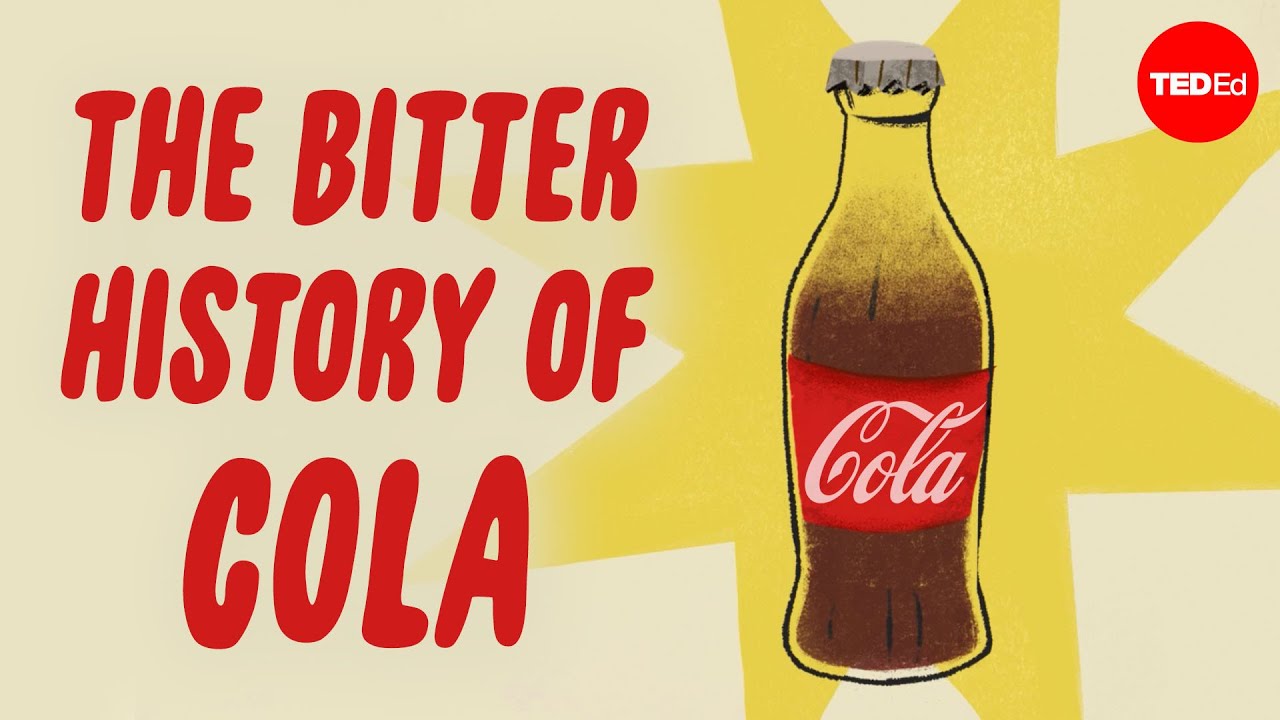
The kola nut's journey: discussing historical impact and cultural significance
C1
90 min
Premium
1

Think about these questions before watching. Share your ideas with a partner.

  1. Think of a food or ingredient that is central to a culture you know well. How might its meaning and value change if it were to become a global commodity?
  2. From coffee to energy drinks, stimulants are a common part of modern life. Where do you draw the line between using a substance for a harmless boost and developing an unhealthy reliance on it for performance?
  3. The journey of an ingredient from one part of the world to another often has a complex history. To what extent should we be aware of the origins and historical impact of the everyday products we consume?
2

Watch the video carefully. Pay attention to the main ideas and key details.

Video script75 segments · click a timestamp to jump

In 1910, the Antarctic Nimrod Expedition was in trouble.

Led by Ernest Shackleton,

the team had set the record for the southernmost point ever reached.

But after miscalculating how long it would take to return

to the nearest supply depot,

the crew had run out of food.

Fatigued and desperate, they turned to their medical kit.

It contained a drug called “Forced March tablets,”

which promised to mitigate hunger and prolong endurance,

thanks to the powerful combination of its two ingredients:

cocaine, and the extract of the African kola nut.

After taking the pills, the team was able to push through and reach safety.

So how did the kola nut, a sacred ingredient from West Africa,

end up in Shackleton's emergency kit?

And how did this same combination of kola nut and cocaine

make its way into the original recipe of a drink

that billions of people consume every day?

The kola nut is the seed of the kola tree,

a small evergreen native to the tropical forests of West Africa,

where it has long been integral to the cultural fabric of many communities.

Among the Igbo, the bitter nut is known as the food of the gods.

In Igbo homes, its custom to greet and honor guests

by breaking a seed and sharing the lobes.

Within Yoruba communities,

kola plays a central role in many religious ceremonies,

such as weddings, funerals, and divination.

Kola nuts can contain up to 2.5% caffeine,

or about twice the concentration found in coffee beans,

along with trace amounts of theobromine, a structurally similar compound.

Both molecules stimulate the central nervous system,

causing effects like alertness

and increased blood flow to the muscles and lungs.

And it’s these properties that likely led to kola’s long-standing use

in traditional West African medicine.

But there’s also a bitter side to the kola nut’s history.

As early as the 10th century,

it was used by various groups in West Africa as currency

to purchase captives across the Sahara.

And in the 16th century, Portuguese and Afro-Portuguese traders in the region

similarly exchanged the seeds for people,

whom they then sold into transatlantic slavery.

By the 17th century, the kola nut had made its way to the Americas.

Brazilian oral narratives tell of enslaved peoples

smuggling the seeds across the Atlantic in their clothing and hair.

Enslavers who learned of the nut’s energizing properties often weaponized it,

supplying it to subjugated workers to induce more back-breaking labor.

However, in places like Jamaica, Cuba, and Brazil,

many enslaved communities managed to cultivate kola on their own,

allowing them to preserve and continue practicing

their cultural and religious traditions.

In the late 19th century,

the kola nut gained the attention of pharmacists in Europe and North America.

Many claimed, without much evidence,

that the nut contained countless medicinal and even mind-altering properties.

Soon, kola-containing tonics, chocolates, and lozenges lined pharmacy shelves.

It was combined with extracts from the coca leaf, the source of cocaine,

to create Shackleton’s Forced March tablets,

which were also supplied to British soldiers during World War I.

In 1886, Atlanta pharmacist John Pemberton used this same potent combo

to create the original recipe for Coca-Cola,

which he claimed could treat ailments like headaches, indigestion, and impotence.

By the 1920s, African export of the kola nut slowed,

thanks in part to the introduction of another energizing seed from the region:

the cocoa bean.

Around this time, the Coca-Cola company is also said

to have significantly reduced the kola nut in its recipe,

but no one knows for sure—

the exact ingredients remain a closely guarded trade secret.

However, we do know that the company removed all traces of cocaine by 1903.

Today, the kola nut can still be found in various drinks and supplements,

like Bissy tea, a staple in many Jamaican homes.

Believed to have been first brought to the region on slave ships

in the 17th century,

this tea is just one example of how the kola nut, despite its bitter past,

continues to serve as a powerful symbol of cultural preservation and remembrance.

3

Answer these questions in your own words. Support your answers with evidence from the video.

01According to the video, in what ways is the kola nut integral to the cultural fabric of certain West African communities?
Sample answerIt's deeply embedded in social and religious life. For the Igbo people, it's considered sacred, the 'food of the gods', and is used as a gesture of hospitality to welcome guests. In Yoruba communities, it plays a key part in major life ceremonies, such as weddings and funerals.
02How does the video portray the contrasting roles the kola nut played for enslavers and enslaved communities in the Americas?
Sample answerIt shows a stark contrast. Enslavers weaponized its energizing properties to exploit enslaved people and force more labor from them. Conversely, enslaved communities managed to cultivate it themselves, using it as a way to preserve and continue the cultural and religious traditions they had brought from Africa.
03What factors contributed to the kola nut's integration into Western commercial products during the late 19th century?
Sample answerIts popularity was largely driven by pharmacists in Europe and North America. They made numerous, often unsubstantiated, claims about its medicinal and even mind-altering properties. This hype led to its inclusion in various products like tonics, chocolates, and most famously, the original Coca-Cola formula.
04Why does the video describe the kola nut as having a 'bitter past' while also serving as a 'powerful symbol of cultural preservation'?
Sample answerThe 'bitter past' refers to its role in the slave trade, where it was used as currency to purchase captives and later to exploit enslaved workers. However, it's also a symbol of preservation because enslaved people smuggled the seeds and cultivated them, allowing them to maintain a connection to their heritage. This act of continuing their traditions, as seen with Bissy tea in Jamaica, represents cultural resilience and remembrance despite the oppression they faced.
4

Decide if each statement is true or false. Correct the false ones.

01The kola nut contains a similar concentration of caffeine to coffee beans, which accounts for its stimulating effects.
02Long before its arrival in the Americas, the kola nut was utilized as a form of currency in West Africa to trade for enslaved people.
03The Coca-Cola company removed both cocaine and kola nut extract from its recipe by the early 1900s.
04The same potent combination of kola nut and cocaine found in Shackleton's emergency tablets was also supplied to British soldiers during World War I.
05The rise in popularity of another West African seed, the cocoa bean, was a contributing factor to the decline in kola nut exports in the 1920s.
5

Vocabulary

Vocabulary
These expressions will help you communicate more naturally about this topic.
To be steeped in history/tradition — to be completely surrounded by or filled with a particular quality or influence.
Usage note: This is an evocative phrase often used to describe places, objects, or customs with a long, rich past. It's a more formal and descriptive alternative to 'has a lot of history'.
A double-edged sword — something that has both positive and negative consequences.
Usage note: A common idiom used to acknowledge the complexity of a situation. For example, 'The global popularity of the kola nut was a double-edged sword, bringing economic benefits but also leading to exploitation.'
To cash in on (something) — to make a profit from a situation, often in an opportunistic or exploitative way.
Usage note: This is an informal phrasal verb. It carries a slightly negative connotation, suggesting someone is taking advantage of a trend or resource purely for financial gain.
To trace (something) back to — to discover the origin of something by following its development from the present to the past.
Usage note: A neutral, semi-formal phrase perfect for historical or analytical discussions. For example, 'The video traces the kola nut's journey back to its origins in West Africa.'
Cultural appropriation — the unacknowledged or inappropriate adoption of the customs, practices, or ideas of one group by members of another, typically more dominant, group.
Usage note: This is a specific term used in critical discussions about culture. It implies more than just borrowing; it involves a power imbalance and a lack of respect or credit for the source culture.
6

The Kola Nut's Journey: A C1 Matching Exercise

Test your understanding of vocabulary and concepts from the lesson on the kola nut and its historical significance.

Match each item on the left with the correct item on the right.

A
B
7

Useful phrases: debating the commercialization of cultural products

Vocabulary
The story of the kola nut raises complex questions about how cultural items are adopted and commercialized globally. Here are some phrases to help you navigate nuanced discussions on this topic, allowing you to express complex viewpoints and manage disagreements effectively.
"There's a fine line between appreciation and exploitation." — To introduce nuance and suggest that a situation is complex and requires careful judgment.
Register: neutral. Use this to open a counter-argument or add complexity to someone else's point. You can substitute 'appreciation' and 'exploitation' with other relevant concepts, like 'inspiration and imitation'.
"I'm of two minds about this." — To express that you have conflicting feelings or see valid arguments on both sides of an issue.
Register: neutral/slightly informal. This is a great way to show you've considered the complexity of the topic before stating your more detailed opinion.
"That's one way of looking at it, but it's also worth considering the historical context." — To politely introduce an alternative viewpoint without directly invalidating the other person's opinion.
Register: neutral/formal. This phrase softens disagreement and frames your contribution as an additional, valuable perspective. The final part can be adapted, e.g., '...worth considering the impact on the source community'.
"The flip side of that is the potential for the original meaning to be completely erased." — To introduce the negative consequence or downside of a seemingly positive development.
Register: neutral. Use this to pivot the conversation towards the negative implications of something like global popularity or commercialization.
*"Perhaps the real question isn't if it should be shared, but how it can be done ethically."* — To shift the focus of the debate from a simple yes/no question to a more nuanced discussion about the method or process.
Register: neutral. This is a powerful way to reframe a deadlocked argument and suggest a more productive direction for the conversation.
"Ultimately, it all boils down to respect and recognition." — To summarize a complex argument and state what you believe is the most fundamental point.
Register: neutral. Use this to conclude your point or bring the discussion back to its core elements. The part after 'boils down to...' can be replaced with other core concepts, like 'consent and compensation'.
8

From sacred seed to global commodity

Read the passage about the complex history of cultural products and fill in the blanks.

Fill in each blank with the correct word or phrase from the word bank.

Word bank
The history of the kola nut is a fascinating case study. For many West African communities, the nut is in tradition, yet its global journey became a . While its stimulating properties were valued, Western entrepreneurs were quick to on them, often without acknowledging their origins. We can the genesis of several famous products back to this period of intense commercialization. This raises complex questions about , where a sacred item is commodified, and its original cultural context is largely ignored.
9

Grammar: Inversion for emphasis

Grammar
Inversion is a technique used to add emphasis, often in formal or literary writing. By placing a negative or limiting adverbial at the beginning of a sentence, we reverse the usual subject-verb order, creating a more dramatic effect perfect for discussing historical events like those in the video.
Not only did the kola nut provide a powerful stimulant, but it also played a central role in West African ceremonies.
After 'Not only', we use an inverted structure: auxiliary verb ('did') + subject ('the kola nut') + main verb ('provide').
Seldom had European traders understood the deep cultural significance of the goods they were exporting.
A common mistake is forgetting to invert. For example: 'Seldom European traders had understood...'. The subject and auxiliary verb must switch places.
Under no circumstances should the bitter side of the kola nut's history, such as its use as currency for captives, be ignored.
Inversion is also used after expressions like 'Under no circumstances', 'On no account', and 'In no way'.
  • Place the negative or limiting adverbial at the start of the sentence for emphasis.
  • Invert the subject and the auxiliary verb (do, have, be) or modal verb (can, will, should).
  • Use this structure mainly in formal writing and speeches, not typically in casual conversation.
10

Spot the mistake

The following sentences explore the broader themes from the video. Read each one carefully to find the error.

Each sentence contains one error. Find and correct it.

01Not only the kola nut was a stimulant, but it also held deep cultural significance in West African societies.
Corrected version
Not only was the kola nut was a stimulant, but it also held deep cultural significance in West African societies.
02Many 19th-century pharmacists were quick to cash on the public's fascination with exotic remedies.
Corrected version
Many 19th-century pharmacists were quick to cash in on the public's fascination with exotic remedies.
03The tradition of sharing the kola nut is steeping in the cultural fabric of many communities.
Corrected version
The tradition of sharing the kola nut is steeping steeped in the cultural fabric of many communities.
04The commercialisation of the kola nut without acknowledging its origins is a clear example of cultural appropriate.
Corrected version
The commercialisation of the kola nut without acknowledging its origins is a clear example of cultural appropriate. appropriation.
05For enslaved peoples, the kola nut's energising properties were a double-sided sword, providing stamina but also enabling further exploitation.
Corrected version
For enslaved peoples, the kola nut's energising properties were a double-sided double-edged sword, providing stamina but also enabling further exploitation.
06Rarely a single plant-based ingredient has had such a complex and globally significant history.
Corrected version
Rarely has a single plant-based ingredient has had such a complex and globally significant history.
07The origins of this global beverage can be traced back for a potent combination of kola nut and coca leaf extracts.
Corrected version
The origins of this global beverage can be traced back for to a potent combination of kola nut and coca leaf extracts.
11

Discuss these questions with a partner. Try to use vocabulary from the lesson.

  1. Is it always a form of cultural appropriation when a multinational corporation cashes in on an ingredient steeped in the tradition of a specific community? At what point does global appreciation cross the line into exploitation?
  2. Think of a product or practice from your own culture that is steeped in tradition. If its history could be traced back to something controversial, like the kola nut's connection to the slave trade, how should that affect its modern-day perception and use?
  3. The video mentions Shackleton's team using 'Forced March tablets' for survival. Considering modern equivalents from energy drinks to prescription stimulants, to what extent is the pursuit of enhanced human performance a double-edged sword for society?