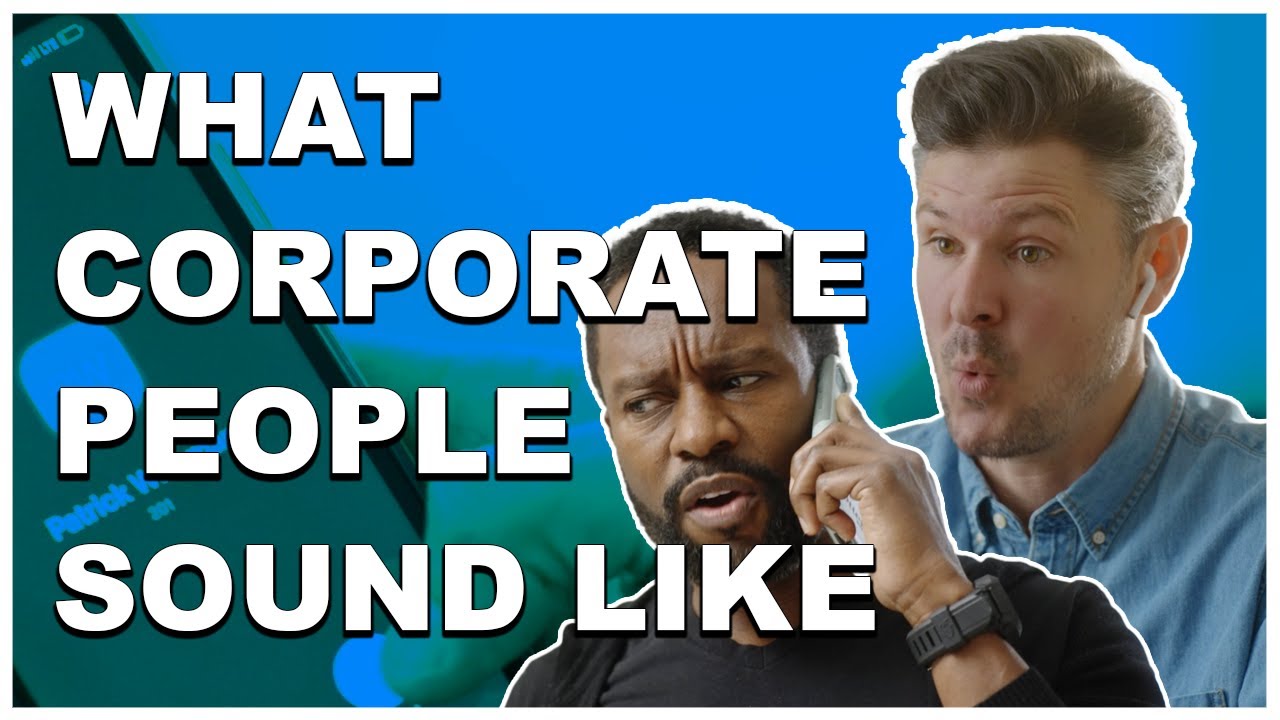
Corporate jargon: understanding and using business idioms
1
Think about these questions before watching. Share your ideas with a partner.
- Why do you think specialized phrases or 'jargon' are so common in professional environments? Do they generally help communication or make it more complicated?
- Think about your own field of work or study. What are some common expressions or acronyms that an outsider would probably not understand?
- Describe a time you heard a confusing phrase or idiom in a professional or academic setting. What did you think it meant, and what did it actually mean?
2
Watch the video carefully. Pay attention to the main ideas and key details.
3
Answer these questions in your own words. Support your answers with evidence from the video.
01Why is Greg initially hesitant to discuss the Q3 forecast with Patrick?
Sample answerHe seems hesitant because he's very busy and overworked. He tells Patrick he's 'burning the candle at both ends,' which is an idiom that means he's working extremely hard.
02What is Carl's response when Patrick asks if his sales team has the 'adequate tailwind'?
Sample answerCarl doesn't give a clear answer. He says he needs to 'marinate on that,' meaning he needs time to think about it, and asks if they can 'put a pin in it,' which means postponing the discussion.
03Based on the conversation, why do the colleagues decide it's necessary to involve Nancy?
Sample answerThey seem to bring her in because the discussion isn't progressing and they've hit a problem. Patrick mentions getting 'pushback,' and Greg is concerned Nancy might be 'in the dark,' which suggests she is a senior person who needs to be aware of issues.
04In what way does Nancy describe the main problem, and what is her proposed solution?
Sample answerShe describes the problem using a lot of confusing jargon, calling it a 'paradigm shift' that is also 'low-hanging fruit with no value add.' Her solution is equally vague; she suggests they 'seal the deal' and 'gather the troops' to 'aim for win-win' without giving any specific steps.
4
Key expressions for the workplace
Vocabulary
The video uses a lot of exaggerated corporate jargon. Here are some more common and useful expressions for discussing projects and collaboration at work.
Examples
To be on the same page — to have a shared understanding or to be in agreement with others.
Usage note: This is often used as a question to confirm everyone understands before moving forward. For example: 'Before we continue, let's make sure we're all on the same page.'
To get the ball rolling — to start a process, project, or discussion.
Usage note: A common and friendly way to begin an activity. You might say it at the start of a meeting: 'Okay, let's get the ball rolling with the first item on the agenda.'
To run into a roadblock — to encounter a significant problem or obstacle that stops progress.
Usage note: This is a useful metaphor for when a project gets stuck. You can then discuss how to 'overcome' or 'get around' the roadblock.
To follow up on something — to take further action or get more information about a previous discussion or task.
Usage note: This is a more standard and clear alternative to the video's 'circle back'. It's common to 'follow up with an email' or 'follow up with a colleague'.
Actionable feedback — advice or criticism that is specific, practical, and leads to clear steps for improvement.
Usage note: This collocation is important for effective communication. It's the opposite of vague criticism. For example: 'The comment 'do better' isn't helpful, but suggesting specific data points to include is actionable feedback.'
5
Decide if each statement is true or false based on the video. Correct the false ones.
01The video begins with a discussion about the Q3 (third quarter) forecast.
02Patrick uses Zoom Phone to contact his colleague Darren for advice.
03Carl from the sales department agrees to take immediate action on Patrick's request.
04Before speaking with Nancy, a colleague suggests that she might not be aware of the situation.
05Nancy suggests that the team does not have enough funding to complete the project.
6
Complete the sentences with words from the box. One word is extra.
Word bank
01Let's schedule a kick-off meeting for Monday morning to get the ball .
02Before we proceed, let's have a quick sync to make sure we're all on the same about the project goals.
03We were making good progress, but we've hit a major with the new software integration.
04Thanks for the great ideas in the meeting; I'll with an email summarizing the key action points.
05Instead of just saying 'do better,' could you provide some feedback I can use to improve my presentation?
7
Choose the best answer based on what you heard in the video.
01According to Darren, what is the best approach to dealing with the Q3 forecast?
02What is the primary purpose of the first conversation between Patrick and Greg?
03What is the main tool the team uses to bring new people into the conversation?
04Which of the following business ideas is NOT mentioned as a solution or strategy in the video?
8
Business Jargon Match-Up
Many business conversations use idiomatic expressions. Test your understanding of common phrases from the lesson.
Match each item on the left with the correct item on the right.
A
B
9
Discuss these questions with a partner. Try to use vocabulary from the lesson.
- Some argue that using business idioms like 'to get the ball rolling' makes communication more efficient and builds team identity. Others believe it creates confusion and excludes people, as seen in the video. Which side do you agree with more, and why?
- In your country's professional culture, is it more common to speak directly or to use idioms and indirect language? How might this affect international teams trying to make sure everyone is on the same page?
- Imagine you're a manager and a new team member is struggling with company jargon, causing them to run into a roadblock. What steps would you take to help them, and how would you follow up to ensure they feel comfortable enough to give actionable feedback on the team's communication style?