High-stakes crime: speculating about possibilities
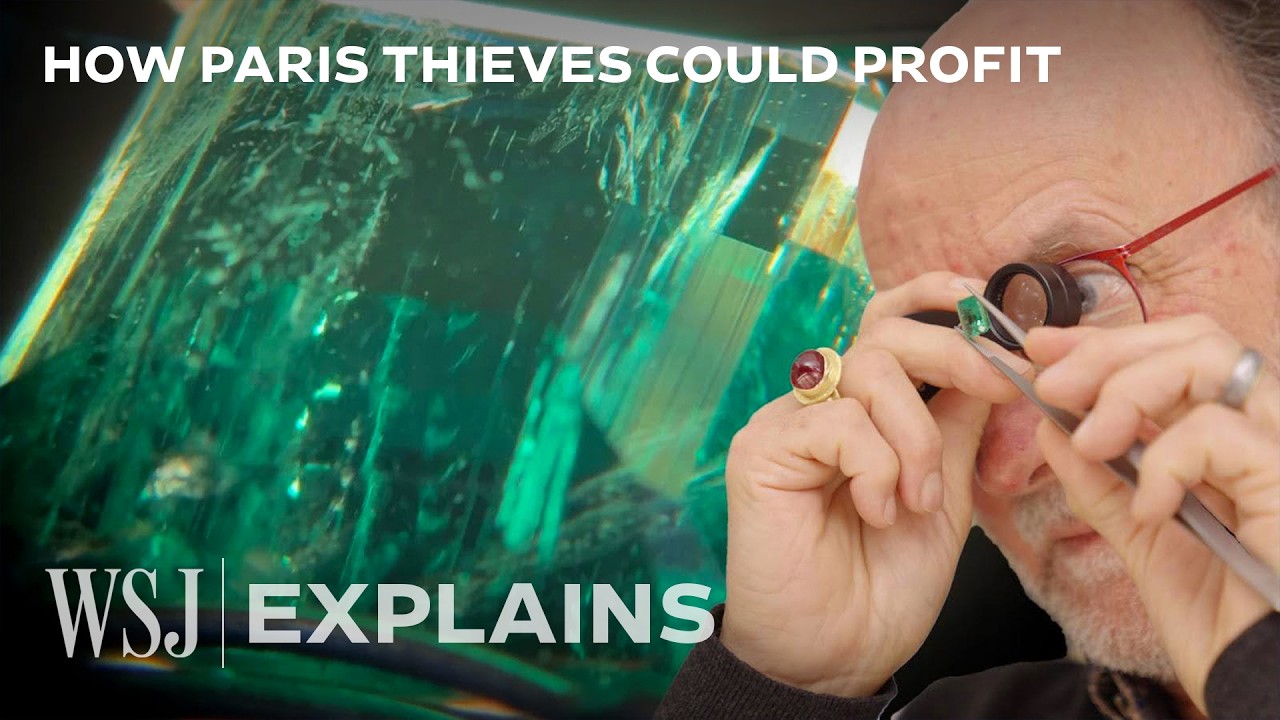
1
Think about these questions before watching. Share your ideas with a partner.
- Think about heist movies or TV shows you've seen. Besides the act of stealing itself, what do you believe is the most difficult challenge for the criminals to overcome?
- If an object is described as 'priceless', what does that mean to you? Can something have immense cultural value but be almost impossible to sell?
- Imagine a criminal has successfully stolen a world-famous painting. What are their options afterwards? How could they possibly profit from something so recognizable?
2
Watch the video carefully. Pay attention to the main ideas and key details.
3
Answer these questions in your own words. Support your answers with evidence from the video.
01According to the video, why would it be nearly impossible for the thieves to get the full value for the jewels if they sold them intact?
Sample answerBecause anyone who bought the complete pieces would also be involved in the crime. The video says they would be 'implicit in the crime' and could go to jail for a very long time. Also, one expert believes the idea of a secret, rich collector ordering the theft is just a fantasy from the movies.
02What makes selling the smaller stones and precious metals easier than selling the larger, more unique gems?
Sample answerThe video explains that the metals can just be melted down, which makes them untraceable, even though they aren't worth much. The small stones are also easy to sell because lots of old jewelry is always being broken up, so similar stones are common on the market and can't be easily identified.
03In what ways could the thieves' attempts to sell the most valuable stones actually lead back to the original crime?
Sample answerThe biggest stones are the most dangerous to sell because their old-fashioned cuts are unique and can be dated. Even if the thieves find a highly skilled person to recut them, an expert like a curator might still recognize them from their internal features, which are described as being like 'fingerprints' inside the stone.
04Besides the technical challenges of selling the jewels, what other major pressure might lead the thieves to abandon their plan?
Sample answerThe video suggests they might get 'cold feet' and become too scared to continue. The crime is so famous that everyone is talking about it, which creates a lot of pressure. This huge amount of attention could make them feel it's too risky to try selling anything, so the best option might be to just leave the jewels somewhere and run away.
4
Vocabulary
Vocabulary
These expressions will help you communicate more naturally about this topic.
Examples
to get away with (something) — to succeed in doing something wrong or illegal without being punished or caught.
Usage note: This is a common phrasal verb. You can use it for serious crimes ('He got away with the robbery') or minor misdeeds ('My colleague gets away with being late every day').
to cover one's tracks — to hide or destroy evidence of your activities so that no one can find out what you have done.
Usage note: This phrase is often used when discussing how criminals try to avoid capture. For example, 'The thieves wore gloves and wiped all surfaces to cover their tracks.'
the black market — an illegal system for buying and selling goods that are difficult or illegal to obtain.
Usage note: This is the key term for the illegal trade of items like stolen art, weapons, or controlled substances. For example, 'It's nearly impossible to sell such a famous piece, even on the black market.'
an inside job — a crime, especially a theft, committed with help from someone who works for the organization that is robbed.
Usage note: Use this phrase to speculate that someone with internal knowledge, like an employee, helped the criminals. For example, 'The police suspect it was an inside job because the alarm system was disabled.'
a person of interest — someone who the police think may have been involved in a crime, but who has not been arrested.
Usage note: This is a more formal term used by police and in news reports. It's more neutral than 'suspect' and suggests the investigation is still in its early stages.
5
Decide if each statement is true or false. Correct the false ones.
01The precious metals from the jewelry, such as gold and silver, are relatively easy to sell but are not considered highly valuable.
02According to one expert, the jewels were most likely stolen to order for a wealthy, anonymous collector.
03The video suggests that pearls would be particularly difficult to disguise because of their unique shapes.
04Recutting a large, unique gem can make it harder to trace, but this process significantly reduces its size.
05The internal 'fingerprints' of a stone, like cracks and crystals, can be removed by a skilled gem cutter to make it untraceable.
6
Complete the sentences with words from the box. One word is extra.
Word bank
01The thieves knew the exact location of the security cameras and when the guards changed shifts, leading police to believe it was an .
02After the robbery, the criminals meticulously wiped all surfaces and burned their clothes to .
03Although they haven't arrested him, the detective confirmed that the disgruntled former employee is a in the investigation.
04Stolen art and priceless jewels are often sold on the for a fraction of their real value.
05The mastermind behind the heist was so arrogant; he genuinely thought he could such a high-profile crime.
7
Choose the best answer based on what you heard in the video.
01According to one expert in the video, why is the theory of a 'stolen to order' heist for a private collector unlikely?
02What is the estimated percentage of the jewels' market value that the thieves could realistically expect to receive?
03Who does the video suggest might be able to identify the larger stones even after they have been recut?
04Which of the following methods for dealing with the stolen jewels is NOT mentioned as a possibility in the video?
8
The Louvre Heist: Matching Terms
Test your understanding of vocabulary and phrases from the lesson.
Match each item on the left with the correct item on the right.
A
B
9
Discuss these questions with a partner. Try to use vocabulary from the lesson.
- Some argue that if a priceless stolen artifact can't be recovered, it's better for it to be sold intact on the black market to a private collector than to be destroyed. Others disagree. What is your view and why?
- Think of a culturally significant object in your country. What security measures protect it, and do you believe a sophisticated team could get away with stealing it? Would it likely have to be an inside job?
- The video mentions the difficulty of covering one's tracks. Besides physical evidence, what kind of digital or financial trail might lead police to make someone a person of interest in a major heist today?