Energy and execution: The science of decision making
B2
90 min
Premium
1

Think about these questions before watching.

  1. Do you believe that making many small decisions can affect your ability to make big ones?
  2. What helps you feel mentally ready when you need to make an important choice?
2

Watch the video carefully. Pay attention to the main ideas and key details.

Video script65 segments · click a timestamp to jump

Someone once said that life is just one decision after another

and I agree.

Some decisions are small, like what to wear

but some are so big they'll affect us for decades to come,

like choosing a career.

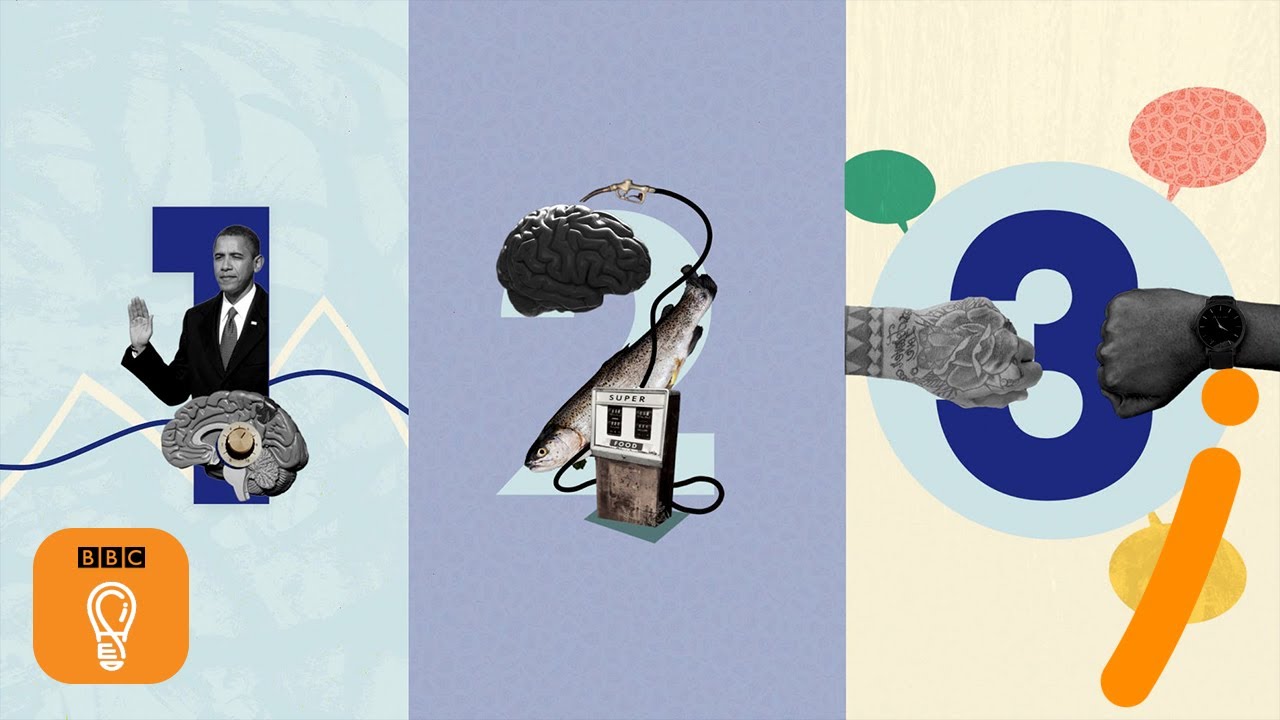
When I'm facing a big decision I make sure I do three things.

Free up my brain's bandwidth, give it the fuel it needs

and get honest advice from a friend.

By eliminating the small choices in life

you save the best of your brain's ability

for the really important things.

When he was in office,

Barack Obama removed one decision from his daily life -

what to wear.

It was always a grey or blue suit and a white shirt

because he knew the science behind decision-making

and that by wearing a kind of uniform

he'd save bandwidth for the really important choices.

Scientists studying the brain have seen that all decisions,

big or small, consume the same amount of energy.

A small decision takes the same amount of energy as a big one.

So when you need to make really important decisions,

like which university to apply to or which job offer to accept

be vigilant about not wasting energy on decisions

that aren't going to make a massive difference to your life.

Save your brain's bandwidth for things that really matter.

Your brain needs fuel to think just as much as your body does to move.

Thanks to advanced imaging

we can watch the brain working away more clearly than ever before.

It’s the most complex and energy-demanding organ we have.

If you're very hungry neurotransmitters can't be produced

which results in communication

between the brain's 86 billion neurons breaking down,

compromising your ability to think and make good decisions.

So when you need to make an important decision make sure you're not hungry.

And I don't mean reach for the biscuit tin.

Research shows that drinking plenty of water

and having a slow-release carbohydrate breakfast like porridge

will help you think clearly.

Omega-3 is also a brilliant brain food.

You can find it in oily fish and pumpkin and sunflower seeds.

It doesn't mean you can't treat yourself

but do try to give your brain this kind of fuel too.

The final step is to stop the fear of loss dominating your decision-making.

Nobel laureate Daniel Kahneman

spent a decade studying human decision-making

and found that in big decisions we're generally more afraid of loss

than we are motivated gain.

According to his research, this means we often pick the safest option

rather than the one that will have the most positive impact

on our lives.

Kahneman's got a great tip for getting over this fear of loss.

Ask the advice of a friend who's not afraid to drop some truth bombs

even if it means your feelings get a bit roughed-up.

An objective friend can help you identify the best decision

because they're not weighed down by the fear of what could be lost.

In the end the decision is always yours

but it helps to seek this kind of advice.

So the next time you're facing a big decision

free your brain from small decisions

give it really good fuel

and seek out a friend who cares more about your future than your feelings.

Thanks for watching.

Don't forget to subscribe and click the bell to receive notifications for new videos.

See you again soon!

3

Answer these questions in your own words. Support your answers with evidence from the video.

01What strategy did Barack Obama use to save his brain's energy for important decisions, according to the video?
Sample answerHe always wore the same kind of clothes, like a grey or blue suit and a white shirt. This meant he didn't have to think about what to wear, saving his brainpower for bigger things.
02Besides avoiding hunger, what specific foods and drinks does the video suggest for fueling your brain to make good decisions?
Sample answerThe video suggests drinking plenty of water and eating a slow-release carbohydrate breakfast, like porridge. It also mentions Omega-3, which you can get from oily fish or seeds like pumpkin and sunflower.
03According to Nobel laureate Daniel Kahneman's research, why do people often choose the 'safest option' when making big decisions, and how can a friend help overcome this tendency?
Sample answerKahneman's research found that people are usually more afraid of losing something than they are motivated by gaining something. A friend can help because they're objective and not worried about potential losses, so they can give honest advice and help you see the best choice.
04In what ways does the speaker suggest preparing your brain and mind when facing a significant decision?
Sample answerThe speaker suggests three main things. First, free up your brain's 'bandwidth' by not wasting energy on small decisions. Second, give your brain the right fuel by eating well and staying hydrated. And finally, get honest advice from a friend who isn't afraid to tell you the truth, even if it's hard to hear.
4

Vocabulary

Vocabulary
These expressions will help you communicate more naturally about this topic.
weigh the pros and cons — to carefully consider all the advantages and disadvantages of something before making a decision
Usage note: This is a common and useful phrase when discussing choices, both big and small. You can say, 'I need to weigh the pros and cons of moving to a new city.'
decision fatigue — the mental exhaustion that results from making too many decisions, leading to poorer quality choices
Usage note: This is a specific term often used in discussions about productivity and psychology. It explains why people might make impulsive or less optimal decisions later in the day.
free up bandwidth — to make mental capacity, time, or resources available for other, often more important, tasks
Usage note: This is a modern, slightly informal idiom, often used in business or personal productivity discussions. It refers to creating mental space for focused thought.
deliberate over something — to think or talk about something very carefully, especially in order to make an important decision
Usage note: This verb implies a longer, more thoughtful process than simply 'thinking about' something. It's often used for significant choices that require careful consideration.
prioritize tasks — to arrange tasks in order of importance so that you can deal with the most critical ones first
Usage note: This is a key strategy for effective time management and reducing mental overload. It's widely used in professional and personal contexts to manage workload and focus.
5

Complete the sentences with words from the box. One word is extra.

Word bank
01Before making a significant investment, it's wise to of all the available options.
02Constantly making choices throughout the day can lead to , impacting the quality of subsequent judgments.
03By delegating minor responsibilities, leaders can to focus on more strategic planning.
04The board members will the complex proposal for several hours before reaching a conclusion.
05Effective time management requires you to based on urgency and importance.
6

Use the word in brackets to form a new word that fits each gap.

01
His nature often led to missed opportunities and regret.
02
After extensive , the committee reached a unanimous conclusion.
03
To manage your workload effectively, you must learn to your most critical tasks.
04
Experiencing constant decision-making can be incredibly for the mind.
05
The board faced a truly choice regarding the company's future direction.
06
The sheer to choose from countless options can sometimes lead to paralysis.
7

Grammar: Third and mixed conditionals

Grammar
Third and mixed conditionals allow us to discuss hypothetical situations in the past and their consequences. We use them to reflect on decisions that were made (or not made) and imagine different outcomes, helping us learn from experience and consider alternative paths.
If I had prioritized my most important tasks, I wouldn't have felt so overwhelmed yesterday.
The third conditional describes a hypothetical past action and its hypothetical past result, often expressing regret or relief.
If she hadn't delegated that responsibility, she would be struggling with too much work right now.
A mixed conditional connects a hypothetical past action to a hypothetical present result, showing how past choices affect the present.
They would have avoided that costly mistake if they had taken more time to analyze the data.
This third conditional shows how a different past decision could have led to a different past outcome.
If we had understood the long-term implications, we wouldn't be dealing with these complications today.
Another mixed conditional, highlighting how a past lack of understanding impacts current circumstances.
  • Third conditional: 'If + past perfect, would have + past participle'. Used for hypothetical past actions and past results.
  • Mixed conditional: 'If + past perfect, would + base verb'. Used for hypothetical past actions and present results.
  • Remember that both clauses describe unreal or impossible situations because the past cannot be changed.
8

Match each word on the left with its natural partner on the right.

A
B
9

Refining your decisions: An error correction exercise

Improve your accuracy by identifying and correcting common mistakes related to decision-making and cognitive processes.

Each sentence contains one error. Find and correct it.

01After a long day of making choices, I often experience decision exhaustion, making it hard to focus.
Corrected version
After a long day of making choices, I often experience decision exhaustion, fatigue, making it hard to focus.
02Before accepting the job offer, she carefully weighed the pros and cons for the position.
Corrected version
Before accepting the job offer, she carefully weighed the pros and cons for of the position.
03If I would have freed up my mental bandwidth earlier, I would have been able to concentrate better on the critical task.
Corrected version
If I would have had freed up my mental bandwidth earlier, I would have been able to concentrate better on the critical task.
04The committee deliberated about the new policy for hours before reaching a consensus.
Corrected version
The committee deliberated about over the new policy for hours before reaching a consensus.
05It's essential to prioritize your tasks effective; otherwise, you risk wasting valuable time on less important things.
Corrected version
It's essential to prioritize your tasks effective; effectively; otherwise, you risk wasting valuable time on less important things.
06If we had thought more carefully about the project, we wouldn't have so many issues now.
Corrected version
If we had thought more carefully about the project, we wouldn't have be having so many issues now.
07The decision to restructure the company will have a significant affect on employee morale.
Corrected version
The decision to restructure the company will have a significant affect effect on employee morale.
10

Rewrite each sentence using the structure indicated.

01They didn't weigh the pros and cons carefully, so they made a poor investment.
Rewrite using a third conditional.
02He experienced decision fatigue, which led to him making a rash choice yesterday.
Rewrite using a third conditional.
Hint: Think about the cause and effect in the past.
03She didn't free up her mental bandwidth, so she couldn't focus on the critical project.
Rewrite using a third conditional.
04We didn't deliberate over the options long enough, and that's why we missed the deadline.
Rewrite using a third conditional.
05They didn't prioritize their tasks effectively, so they failed to complete the most important one.
Rewrite using a third conditional.
06I didn't make that difficult decision last year, and now I'm still dealing with the consequences.
Rewrite using a mixed conditional (past condition, present result).
Hint: Consider how a past action (or inaction) affects the present.
11

Words to take with you

Vocabulary
These expressions are not in the video but will help you discuss this topic more fluently.
streamline a process — to make a process or system more efficient by simplifying it or making it more effective
Use this when talking about making tasks or workflows simpler and quicker. For example: "We need to streamline our decision-making process to avoid delays."
cognitive load — the total amount of mental effort being used in working memory at any given time
This term is useful when discussing how much mental energy a task or decision requires. For example: "Reducing cognitive load can help prevent errors and improve focus."
be at a crossroads — to be at a point in your life when you have to make a very important decision
This idiomatic expression describes a critical moment of choice, often with significant consequences. For example: "After losing her job, she felt she was at a crossroads in her career."
sound judgment — the ability to make sensible, wise, and well-considered decisions
Use this phrase to describe someone's good decision-making skills or the quality of a particular decision. For example: "A leader needs to demonstrate sound judgment, especially in a crisis."
overthinking — to think about something too much or for too long, often leading to indecision or anxiety
This verb describes the act of excessively analyzing a situation, which can hinder the decision-making process. For example: "Sometimes, the best approach is to trust your instinct and avoid overthinking."
12

Making smart choices

Match each item on the left with the correct item on the right.

A
B
13

Useful phrases: Discussing strategies for effective decision-making

Vocabulary
Making good decisions is a crucial skill, but it can also be mentally exhausting. These phrases will help you discuss your decision-making process, share challenges, and seek advice on how to approach important choices more effectively.
''I'm really deliberating over [this choice/my options] and could use another perspective.'' — This phrase helps you open a conversation about a decision you're struggling with, indicating you've thought about it deeply but are open to input.
Register: Neutral. Use when you want to express that you've been thinking carefully about something and are ready to hear others' views. Connects to the vocabulary 'deliberate over something'.
''I'm trying to weigh the pros and cons, but it's hard to see clearly right now.'' — Use this to explain your current approach to a decision while also admitting you're finding it difficult to make progress.
Register: Neutral. Use when you're actively evaluating options but feel stuck or overwhelmed. Directly uses the vocabulary 'weigh the pros and cons'.
''Honestly, I think I'm hitting a wall with decision fatigue.'' — This phrase is useful for explaining why you might be struggling to make a good choice or feel mentally drained.
Register: Informal/Neutral. Use when you feel mentally exhausted from making too many choices or complex ones. Directly uses the vocabulary 'decision fatigue'.
''How do you usually free up bandwidth when you're facing a big decision?'' — This is a great way to ask for practical advice on managing mental capacity and focus.
Register: Neutral. Use when seeking tips or strategies from someone on how they manage their mental energy for important tasks. Directly uses the vocabulary 'free up bandwidth'.
''I need to prioritize my thoughts on this, but everything feels equally important.'' — Use this to describe a common challenge in decision-making: when all factors seem to hold the same weight, making it hard to focus on what truly matters.
Register: Neutral. Use when you're struggling to identify the most critical aspects of a decision or to order your tasks effectively. Directly uses the vocabulary 'prioritize tasks'.
''What's your take on [situation/option X]? Am I missing anything crucial?'' — This phrase directly asks for an opinion and prompts the other person to help you identify potential oversights.
Register: Neutral. Use when you want specific feedback on an option or to ensure you haven't overlooked vital information or perspectives.
14

Mastering your decisions

The video discusses how understanding decision-making can improve our lives. This exercise explores strategies for making better choices and managing mental energy.

Fill in each blank with the correct word or phrase from the word bank.

Word bank
In today's fast-paced world, we are constantly faced with numerous choices, from minor daily matters to significant life-altering decisions. This can often lead to a phenomenon known as . When our mental resources are depleted, the quality of our judgments can suffer. To combat this, it's crucial to by automating routine choices. For more complex issues, it's wise to carefully, considering all potential outcomes. Additionally, learning to effectively ensures that critical responsibilities receive the attention they deserve, rather than getting lost in a sea of less important demands. By adopting these strategies, we can avoid the need to endlessly over every single choice, leading to better decisions and reduced stress.
15

Complete the sentences with words from the box. One word is extra.

Word bank
01Before making such a significant investment, it's crucial to of all available options.
02Constantly making minor choices throughout the day can lead to , making it harder to focus on important matters.
03Delegating less critical responsibilities can help you for more strategic planning.
04The committee needed to the complex proposal before voting.
05To manage a heavy workload effectively, it's essential to and focus on the most critical items first.