Generational divides: critiquing and assigning blame
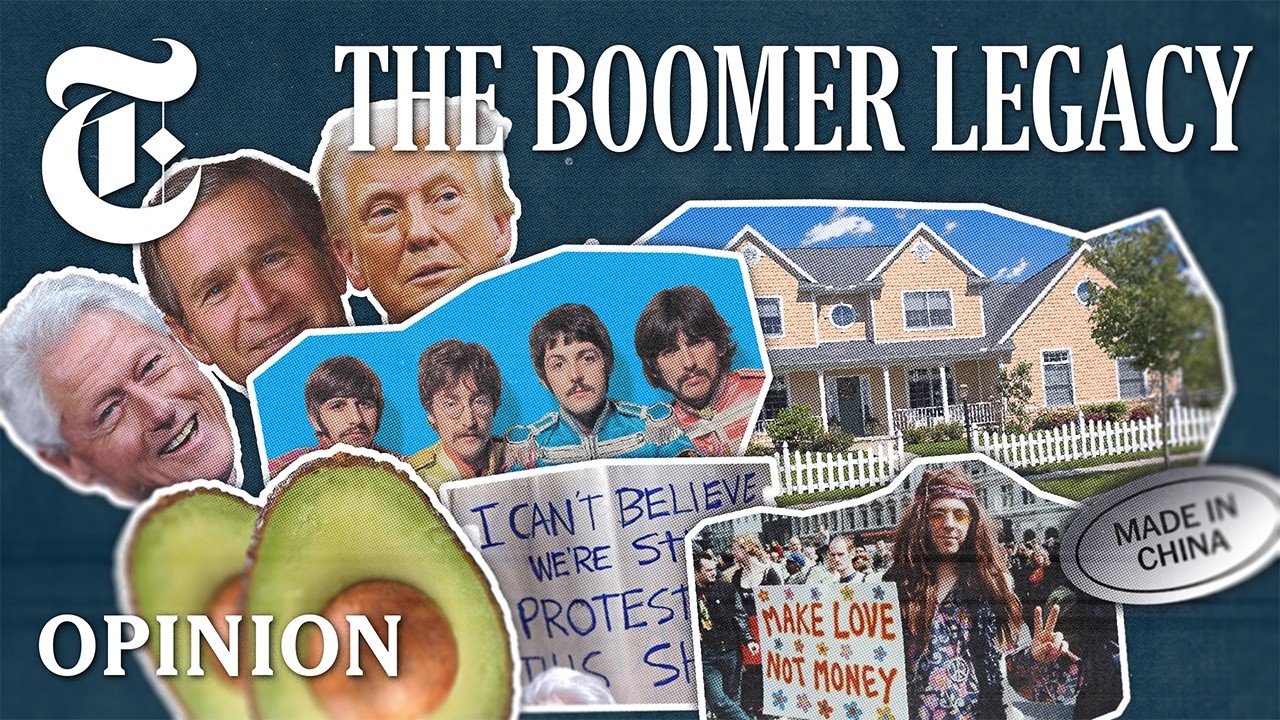
1
Think about these questions before watching. Share your ideas with a partner.
- When people discuss societal issues, they often generalize about entire generations (e.g., 'Millennials are entitled,' 'Boomers are selfish'). How valid do you find these generalizations, and what purpose do they serve in public discourse?
- Consider the economic and social landscape your parents' generation entered as young adults. In what ways was their path to establishing a career and a home fundamentally different from the one facing young people today?
- What responsibility, if any, does one generation have to ensure the prosperity and well-being of the next? How might this responsibility conflict with a generation's own immediate interests?
2
Watch the video carefully. Pay attention to the main ideas and key details.
3
Answer these questions in your own words. Support your answers with evidence from the video.
01According to the video, in what way was America like an 'escalator' for the baby boomer generation?
Sample answerIt means they didn't have to be exceptionally smart or hardworking to become wealthier than their parents. The economic conditions, like cheap college and housing, were so favorable that prosperity was almost automatic. They just had to 'stand on it' and they would be carried upward financially.
02What specific examples does the video provide to support its claim that boomers used their political power to benefit themselves financially?
Sample answerThe video points to several key decisions. It mentions they repeatedly passed large tax cuts for themselves, especially during the Bush years when the government had a surplus. It also highlights an increase in Medicare spending just in time for their retirement, all of which was financed by borrowing money that future generations will have to pay back.
03How does the video suggest the boomer generation has used democratic processes to impact housing affordability and community development?
Sample answerIt argues that they've used their collective voting power to block new construction projects. The purpose of this was to protect their own property values, but the result was making it incredibly difficult for younger people to afford homes in cities with good jobs. The video claims they use democracy to essentially 'freeze their communities in time' for their own benefit.
04The video presents a contradiction regarding the boomer generation's approach to environmentalism. What is this contradiction, and what does the video imply is the real-world consequence of their actions?
Sample answerThe contradiction is that while they are known for championing environmentalism in their youth, their actual legacy is a planet with worsening carbon emissions and pollution. The video suggests their actions, like recycling, were superficial and allowed them to feel good without making difficult changes, like reducing consumption. The major consequence highlighted is the massive island of plastic trash in the ocean, which is a direct result of exporting or dumping their waste.
4
Vocabulary
Vocabulary
These expressions will help you communicate more naturally about this topic.
Examples
To pull up the ladder behind you — to achieve success and then intentionally make it more difficult for others to do the same.
Usage note: This is an idiom often used to criticize individuals or groups who, after benefiting from a system, change it to prevent others from having the same opportunities.
To saddle someone with something — to burden someone with a difficult responsibility or problem, typically a large debt.
Usage note: Commonly used with 'debt,' 'responsibility,' or 'problems.' It emphasizes the unfairness of the burden. For example: 'Previous administrations have saddled the current one with a massive deficit.'
A zero-sum game — a situation in which one person's or group's gain is exactly balanced by the losses of another person or group.
Usage note: This is a useful concept from game theory, often applied to economics and politics. Use it to argue that resources are finite and that one group's advantage comes directly at the expense of another.
To entrench the status quo — to establish a current situation so firmly that it becomes very difficult to change.
Usage note: This is a semi-formal phrase often used in political or sociological discussions. It implies a deliberate effort to protect existing power structures and resist progress.
To rest on one's laurels — to be so satisfied with past achievements that you stop putting in effort to achieve new things.
Usage note: This idiom carries a negative connotation, suggesting complacency. It can be used to criticize a person, company, or even a generation that has stopped innovating or planning for the future.
5
Decide if each statement is true or false based on the video. Correct the false ones.
01One of the video's central arguments is that boomers have consistently prioritized their own financial interests over investing in the future for younger generations.
02According to the video, the national debt increased by almost $30 trillion over the last fifty years due to boomer policies.
03The video acknowledges that the boomer generation made valuable contributions in areas such as civil rights and the development of the World Wide Web.
04The video identifies the Bush presidency as a period of 'peak boomer' policy, marked by substantial tax cuts and a major expansion of Medicare spending.
05The narrator criticizes the boomer generation for embracing recycling as a genuine, effective solution to environmental problems.
6
Complete the sentences with words from the box. One word is extra.
Word bank
01Many young graduates feel they have been with insurmountable student debt, hindering their ability to achieve financial independence.
02Critics argue that current housing policies only serve to the existing wealth gap, making it nearly impossible for newcomers to enter the property market.
03After a period of unprecedented economic growth, there's a danger that the country might simply rest on its , failing to innovate for the future.
04Some view intergenerational economics as a game, where the prosperity of one generation must come at the direct expense of another.
05There's a common accusation that the older generation, having benefited from free education and affordable housing, effectively pulled up the behind them.
7
Choose the best answer based on what you heard in the video.
01According to the video, what was a long-term consequence of the boomer generation's support for deregulation?
02What is the video's main criticism regarding political leaders from the boomer generation?
03The video makes a striking claim about the social legacy of the boomers' housing and community policies. What is one of the stated consequences?
04Which of the following criticisms is NOT mentioned in the video?
8
Intergenerational Impact: Matching Collocations
Match each item on the left with the correct item on the right.
A
B
9
Discuss these questions with a partner. Try to use vocabulary from the lesson.
- The video frames the relationship between generations as a zero-sum game, where the older generation's gains came at the expense of the younger. To what extent do you agree with this perspective, and is it inevitable that generations will have competing interests?
- Reflecting on your own country's recent history, can you identify a specific policy or societal shift where it appears an older generation has 'pulled up the ladder behind them'? How have their decisions served to entrench the status quo for younger people?
- Looking ahead, what is the single biggest challenge that today's younger generations might inadvertently saddle future generations with? Considering the risk of a generation resting on its laurels after tackling current crises, what proactive measures could prevent a new cycle of intergenerational blame?