Weight loss myths: discussing cause and effect
1
Think about these questions before watching. Share your ideas with a partner.
- When people decide they want to get healthier or lose weight, what are the first things they typically do, and why do you think these are the most popular strategies?
- Consider the common saying, 'You can't outrun a bad diet.' What do you think this means, and to what extent do you agree with it based on your own experiences or observations?
- Besides weight management, what are some of the most significant mental and physical benefits of regular physical activity? Describe a time you personally experienced one of these benefits.
2
Watch the video carefully. Pay attention to the main ideas and key details.
3
Answer these questions in your own words. Support your answers with evidence from the video.
01According to the video, what is the primary benefit of exercise, and why is it not considered an effective tool for weight loss?
Sample answerThe video says the main benefit of exercise is for your general health, helping you live a longer and happier life. It's not an effective weight loss tool because physical activity only accounts for a small part, about 10-30%, of the total calories we burn each day.
02What does the video mean by 'compensatory behaviors', and in what ways can they undermine a workout?
Sample answerThey are actions people take, often without realizing it, that cancel out the effects of their exercise. For example, a person might feel extra hungry after a workout and eat a larger meal, or they might be less active for the rest of the day because they feel tired.
03What was the surprising discovery from the study of the Hadza people, and what does it suggest about the connection between an active lifestyle and daily energy use?
Sample answerThe surprising discovery was that the very active Hadza people burned the same number of calories daily as less active adults in the US and Europe. This suggests that our bodies might adapt to high activity levels by conserving energy in other ways, so being more active doesn't automatically mean you burn more total calories.
04Why does the video argue that some companies have promoted a misleading message about exercise and diet?
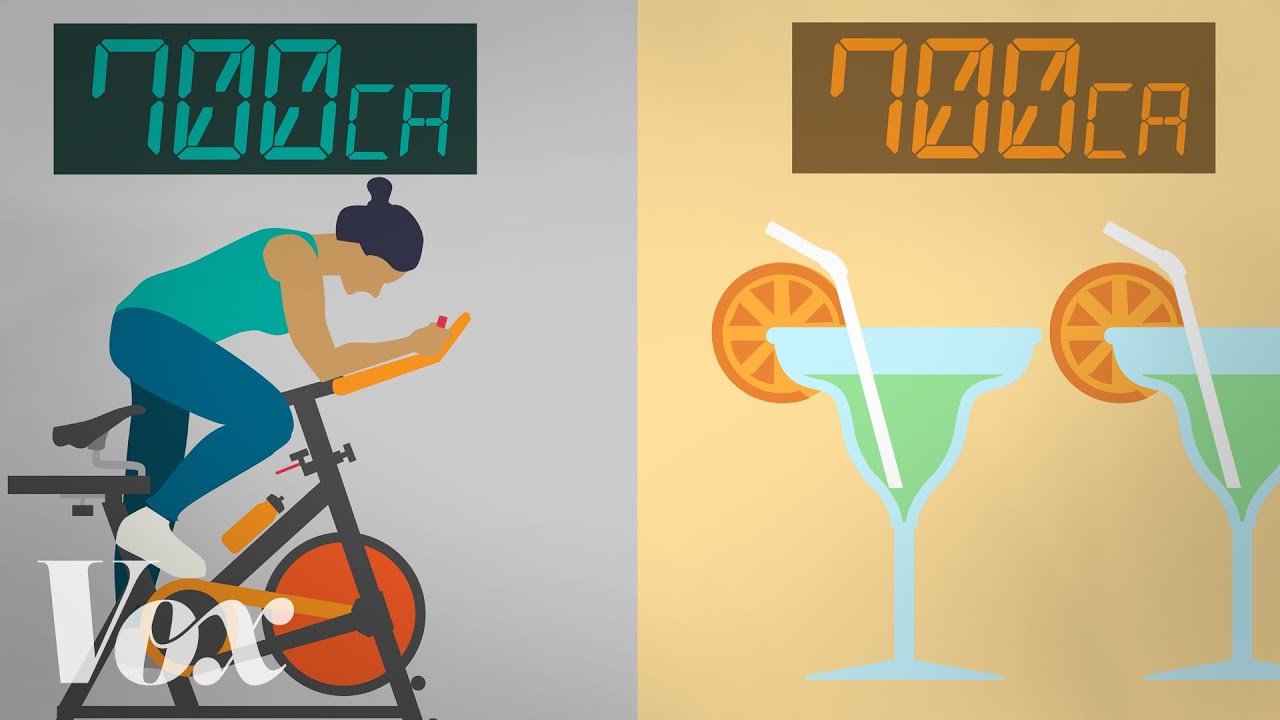
Sample answerThe video argues the message is misleading because companies suggest that you can eat or drink their unhealthy products as long as you exercise to 'burn it off'. This is misleading because it takes an enormous amount of effort and time to burn the calories from even a single unhealthy item, which makes it an unrealistic strategy.
4
Key vocabulary
Vocabulary
These expressions will help you discuss the topic of health and fitness more precisely.
Examples
A quick fix — a simple and fast, but often temporary, solution to a problem.
Usage note: This phrase often has a slightly negative meaning, suggesting the solution isn't sustainable. Common phrases are 'look for a quick fix' or 'there is no quick fix'.
To take something with a grain of salt — to understand that a statement or piece of information may not be completely true.
Usage note: Use this idiom to express healthy skepticism about claims you hear. For example: 'Take social media fitness advice with a grain of salt.'
To fall short of expectations — to fail to achieve the result that was hoped for.
Usage note: This is a useful, slightly formal way to talk about disappointing results. For example: 'The weight loss from just exercising often falls short of people's expectations.'
In the long run — over a long period of time in the future.
Usage note: Use this to contrast short-term actions with their future consequences. It's often used to give advice: 'It seems hard now, but you'll be healthier in the long run.'
To have a knock-on effect — to start a process in which one action causes a series of other, indirect actions.
Usage note: This is perfect for talking about cause and effect. It can be positive or negative: 'Sleeping better has a knock-on effect on my ability to concentrate.'
5
Decide if each statement is true or false. Correct the false ones.
01Metabolic compensation, as described in the video, is the tendency to eat more after a hard workout.
02The expert in the video claims that exercise is the single most effective action a person can take to improve their health.
03According to the video, you have full control over your 'calories in' but only partial control over your 'calories out'.
04A study mentioned in the video concluded that a 200-pound man who runs four hours a week could lose about 5 pounds in one month.
05The video claims that you would need to run for about an hour to burn off the calories from two doughnuts.
6
Complete the sentences with words from the box. One word is extra.
Word bank
01Many people are looking for a quick for their health problems, but sustainable change takes time and effort.
02If you set unrealistic weight loss goals, you're likely to fall of your expectations and feel discouraged.
03While crash diets might seem effective, in the long , they often lead to more health complications.
04Improving your sleep schedule can have a positive effect on your energy levels, mood, and diet.
05You should take claims about miracle diet pills with a large grain of and consult a doctor instead.
7
Choose the best answer based on what you heard in the video.
01According to the video, which component is responsible for the largest portion of a person's daily energy expenditure?
02What does the video suggest about the historical messaging from companies like Coca-Cola?
03What is the main recommendation the video gives to public health policymakers regarding the obesity problem?
04Which of the following is NOT mentioned in the video as a way the body adapts to an increase in exercise?
8
Exercise and Energy Burn
Test your understanding of key concepts from the lesson.
Match each item on the left with the correct item on the right.
A
B
9
Discuss these questions with a partner. Try to use vocabulary from the lesson.
- The video suggests that the common belief about exercise for weight loss is a myth. To what extent do you think the fitness industry is responsible for promoting exercise as a quick fix for weight loss, and should their marketing be taken with a grain of salt?
- Thinking about your country, what are the most common public health messages about diet and exercise? Do you feel these campaigns are effective, or do they often fall short of expectations by oversimplifying the issue?
- The video emphasizes that exercise is not the best tool for weight loss but is crucial for overall health. What small, sustainable lifestyle changes do you believe could have a positive knock-on effect on a person's well-being in the long run?