Color and culture: discussing historical trends
1
Think about these questions before watching. Share your ideas with a partner.
- In many cultures, some colors are seen as 'for boys' and others as 'for girls'. What are some examples from your country, and why do you think this is?
- Think about a color that is very popular in fashion or home design right now. Why do you believe this color has become so trendy?
- How much influence do you think famous people, movies, or social media have on the colors we choose to wear or use in our homes?
2
Watch the video carefully. Pay attention to the main ideas and key details.
3
Answer these questions in your own words. Support your answers with evidence from the video.
01According to the video, what was the general opinion about colors for girls before World War II?
Sample answerIt wasn't a fixed rule. The video says a 1927 survey had mixed answers, and a catalogue from 1918 even suggested blue for girls because it was seen as a delicate color.
02Who was Mamie Eisenhower and how did she influence the popularity of the color pink?
Sample answerShe was the president's wife in 1953. She loved pink and wore a famous pink dress to the inauguration, which made the color very popular. People started calling it 'Mamie pink'.
03In what way did some women start using the color pink to show they were not traditional?
Sample answerThey used it to challenge expectations. For example, the video mentions a female racecar driver who wore a pink uniform and drove a pink car, which was the opposite of a traditional woman's role.
04Why does the video mention Hillary Clinton wearing a pink jacket?
Sample answerIt shows how the meaning of pink has changed. She wore it while talking about being a powerful leader, which is the opposite of the traditional message that Mamie Eisenhower represented with the color.
4
Key vocabulary
Vocabulary
These expressions will help you communicate more naturally about historical and cultural trends.
Examples
To come into fashion — to become popular or stylish.
Use the opposite, 'to go out of fashion', when something is no longer popular. This phrase is great for talking about clothes, music, or ideas.
To catch on — to become popular or fashionable.
This is an informal phrasal verb. It's a natural way to say that an idea or style is spreading and being accepted by many people.
A sign of the times — something that is very typical of the culture or mood of a particular period.
This idiom is often used to comment on a new trend or behavior. For example, 'Everyone staring at their phones instead of talking is a sign of the times.'
To challenge stereotypes — to question or act against a widely held but oversimplified idea about a group of people.
A stereotype is a common but often untrue belief. We often talk about 'challenging gender stereotypes' or 'challenging cultural stereotypes'.
To have a major influence on (something) — to have a powerful effect on how something develops or how someone behaves.
This is a common phrase in both speaking and writing. You can also say someone had 'a big influence' or 'a significant influence'.
5
Decide if each statement is true or false. Correct the false ones.
01A magazine survey in 1927 found that all major stores associated the color pink with girls' clothing.
02Mamie Eisenhower's love for the color pink was a personal preference, not a political one.
03The song 'Think Pink' suggested that women should stop wearing colors like black and blue, which were common during the war.
04The video says that only traditional women, like Mamie Eisenhower, wore the color pink after the war.
05According to the video, pink became a popular color for home decoration around the same time it became popular for clothing.
6
Complete the sentences with words from the box. One word is extra.
Word bank
01The fact that men are now wearing colors like pink is a that old ideas about masculinity are changing.
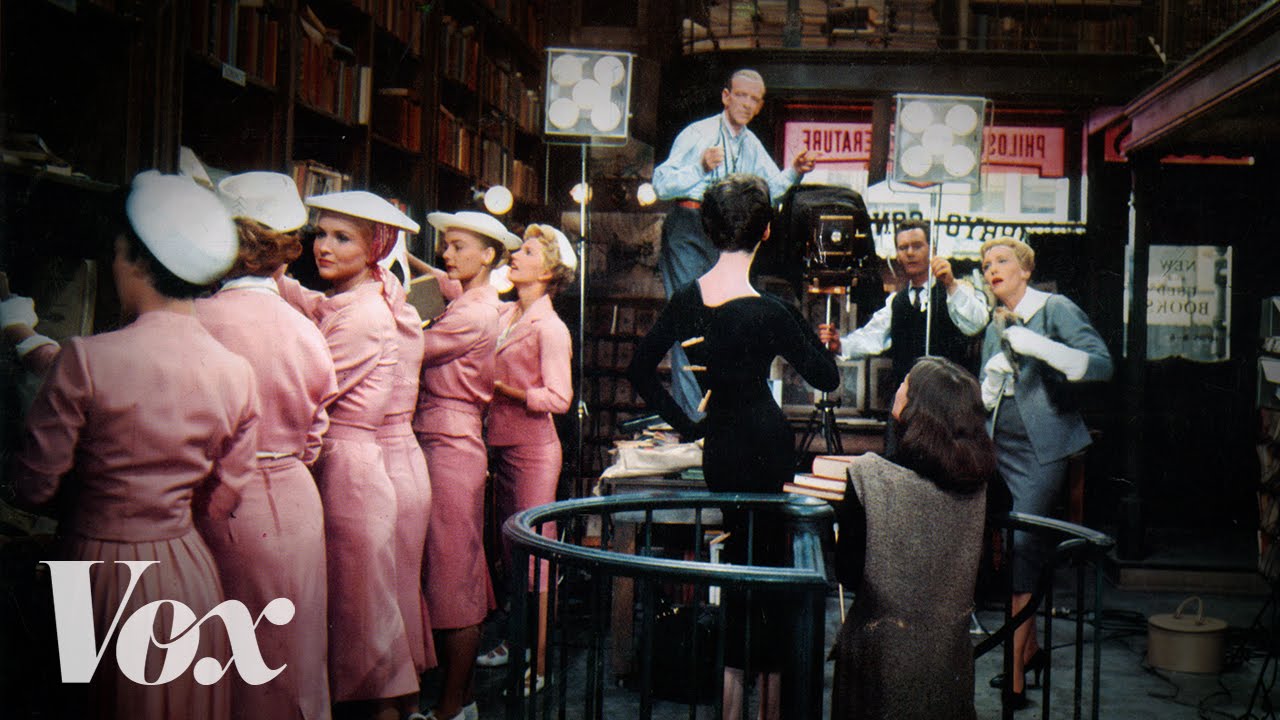
02After the movie 'Funny Face', pink clothes for women came back into in a big way.
03It's interesting to see which historical trends and become popular again decades later.
04Associating colors with genders is an example of how cultural can change over time.
05Mamie Eisenhower had a major on what colors were popular for women in the 1950s.
7
Choose the best answer based on what you heard in the video.
01According to a 1918 catalogue mentioned in the video, why was blue suggested for little girls?
02According to the video, what was Mamie Eisenhower's personal reason for loving the color pink?
03The video mentions Donna Mae Mims as an example of a woman who...
04Which of the following is NOT mentioned in the video as a cultural reference related to the color pink?
8
Vocabulary: The History of Pink
Improve your vocabulary by matching words and phrases from the lesson with their definitions.
Match each item on the left with the correct item on the right.
A
B
9
Discuss these questions with a partner. Try to use vocabulary from the lesson.
- The video explains how 'Mamie pink' came into fashion in the 1950s. Think about a color trend in your country that was a 'sign of the times'. When did this color catch on, and what did it represent?
- Do you think one person can still have a major influence on a fashion trend today, like Mamie Eisenhower did, or is social media now more powerful?
- Today, many people and brands are trying to challenge stereotypes about colors for boys and girls. Do you think this is important? Why or why not?