I can’t speak. Here’s how I get people to listen | Jessica Irwin | TED
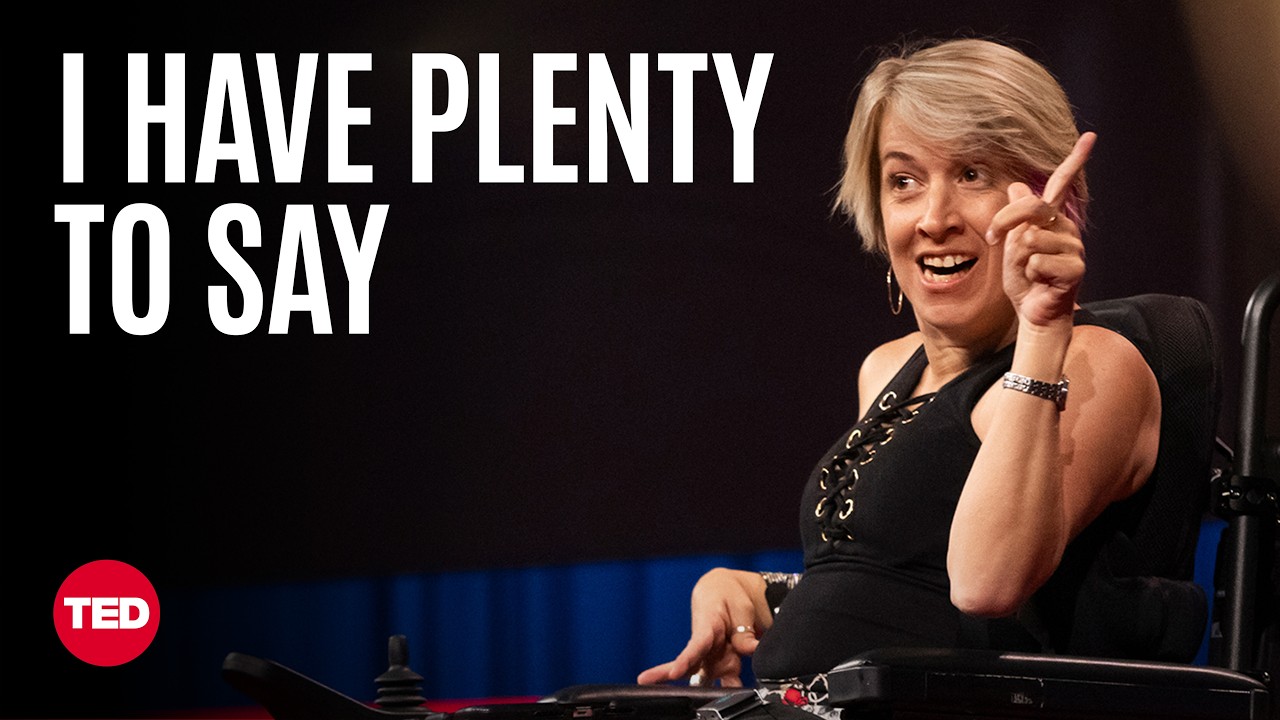
Think about these questions before watching.
- Think about a time when you really needed to express something important, but found it incredibly difficult to make yourself understood. What was the situation, and what made it so challenging?
- How do you typically ensure that your message is clearly understood, especially when discussing something sensitive or urgent? What strategies do you use, and what happens when those strategies aren't effective?
- Beyond spoken words, what are some other powerful ways people communicate their thoughts, feelings, or needs? Can you think of examples where non-verbal communication was essential or even more impactful than speech?
You only need to watch the highlighted section below — the exercises focus on this part.
Answer these questions in your own words. Support your answers with evidence from the video.
Vocabulary
Effective communication: matching phrases
Match each item on the left with the correct item on the right.
Complete the sentences with words from the box. One word is extra.
Grammar: Expressing wishes and regrets with 'wish' and 'if only'
- Use 'wish' or 'if only' + past simple for wishes about the present or future.
- Use 'wish' or 'if only' + past perfect for regrets about the past.
- To wish for a change in someone else's behavior, use 'wish' or 'if only' + 'would' + base verb.
Rewrite each sentence using 'wish' or 'if only' to express a wish or regret.
Sort each item into the correct category.
Useful phrases: Facilitating inclusive discussions
Understanding and bridging communication gaps
The video highlights the importance of finding ways to communicate effectively, especially when facing challenges. This exercise explores the broader aspects of communication and listening.
Fill in each blank with the correct word from the word bank.
Complete the sentences with words from the box. One word is extra.
Words to take with you
Communication: odd one out
Which word or phrase does not belong in each group? Think about the common connection.
Beyond words: the art of true connection
Read the passage below, then answer the comprehension questions.
For many, the simple act of speaking is effortless, but for others, it can be an immense hurdle. Consider Elena, who uses a communication device to express herself. She often has brilliant ideas and sharp observations, yet she struggles to articulate her thoughts and feelings quickly enough in a fast-paced conversation. There are moments when she wishes she could join in spontaneously, or if only others wouldn't interrupt, assuming they know what she means. Bridging this communication gap isn't solely about her device; it's equally about the patience and willingness of her conversation partners. When people practice active listening, truly waiting for her to complete her sentences and engaging with her ideas, they help give her a voice. This transforms a potentially isolating experience into a genuine exchange, proving that true understanding requires effort from all sides. It's a powerful reminder that communication is a shared responsibility.
Discuss these questions with a partner. Try to use vocabulary from the lesson.
- How can communities actively listen to those who struggle to articulate their needs?
- Is technology the most effective way to bridge communication gaps?
- How well does your culture support individuals who struggle to articulate their thoughts?