Making introductions: using body language and clear speech
Master the verbal and non-verbal formula for perfect introductions
1
Think about these questions before watching. Share your ideas with a partner.
- Think about a time you witnessed or were part of an awkward greeting, such as a missed handshake or a confusing hug. What do you think caused the confusion, and how could it have been avoided?
- Beyond a simple handshake or 'hello', what non-verbal cues (like eye contact, personal space, or gestures) are important when meeting someone for the first time in your culture? How might these differ from what you've observed in other cultures?
- When you meet someone new, what specific things do you notice that contribute to your first impression of them? Consider factors beyond just their words, such as their body language, tone of voice, or overall energy.
2
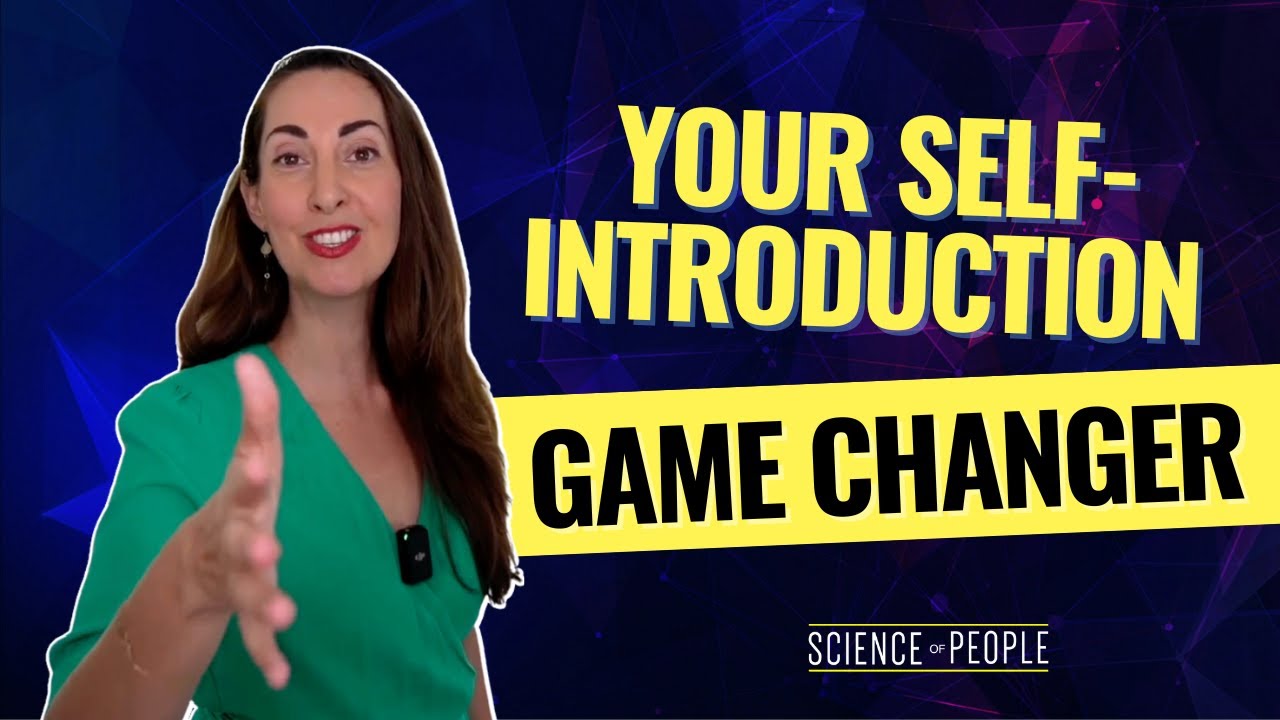
Watch the video carefully. Pay attention to the main ideas and key details.
3
Answer these questions in your own words. Support your answers with evidence from the video.
01According to the speaker, what is the most important rule to follow when smiling during an introduction, and why?
Sample answerThe video says you should only smile if it's authentic. A fake smile is actually worse than not smiling at all because it doesn't seem genuine. So, if you feel happy, you should show it with a real smile.
02How does the speaker suggest you can avoid awkwardness when initiating a physical greeting like a handshake?
Sample answerShe suggests you should clearly signal what you're going to do. For a handshake, you should put your hand out early, which she calls 'blading'. This shows the other person you want to shake hands and avoids confusion about whether to hug or do something else.
03In what way can the speed at which you say your name influence how others perceive you?
Sample answerThe speaker explains that rushing through your name is a big mistake because it can make you seem nervous or lacking in confidence. By saying your name slowly and clearly, you project more confidence and make it easier for people to remember you.
04Why does the speaker emphasize that both non-verbal cues and spoken words must match during an introduction?
Sample answerShe emphasizes this because if they don't match, the introduction fails. She gave an example where she said all the right words but her body language looked terrible, which made the whole introduction feel awkward and insincere. Both parts have to work together to be effective.
4
Vocabulary
Vocabulary
These expressions will help you communicate more naturally about this topic.
Examples
Break the ice — to say or do something to make people feel more relaxed and comfortable when they first meet.
This is a common idiom used in both informal and semi-formal situations. A simple question about the event or a compliment can be a great way to break the ice.
Come across as... — to seem to have particular qualities; to make a particular impression on someone.
This phrasal verb is perfect for discussing first impressions. For example: 'Even if you're nervous, try to smile so you come across as friendly and approachable.'
Read the room — to understand the general mood and feelings of the people in a particular situation or place.
This modern idiom is about social awareness. Before initiating a handshake or a hug, it's important to read the room to see what kind of greeting is appropriate.
Establish rapport — to build a good relationship and understanding with someone, where you can communicate well together.
This phrase is often used in professional or networking contexts. It describes the process of creating a positive connection that goes beyond a simple introduction.
Put someone at ease — to make someone feel comfortable, relaxed, and not nervous.
This is a key goal of a good introduction. Using clear, open body language, as mentioned in the video, is an effective way to put someone at ease.
5
Decide if each statement is true or false. Correct the false ones.
01The speaker suggests including a positive word or phrase, like 'I'm so happy to be here,' right after stating your name.
02Keeping your hands visible during an introduction is recommended because it helps others perceive you as a friend rather than a threat.
03The technique of 'full fronting' is only effective for in-person introductions and doesn't apply to video calls.
04The speaker advises using a long, detailed greeting to make a strong first impression.
05Adding a fun fact to your introduction is presented as an optional way to break the ice if you feel comfortable doing so.
6
Discuss these questions with a partner. Try to use vocabulary from the lesson.
- The video argues that an authentic, serious expression is better than a fake smile when making an introduction. Do you agree? In which professional or social situations might a polite, even if not fully genuine, smile be necessary to put someone at ease or break the ice effectively?
- Think about a time you had to adapt your greeting style for a different culture or a very formal situation, like a job interview. How difficult was it to read the room and choose the right non-verbal cues? How did you try to come across as confident and approachable while navigating these new rules?
- The video focuses on in-person greetings. How do you effectively establish rapport with someone you are meeting for the first time online? What specific strategies can help you come across as friendly and professional in a virtual setting where physical greetings are impossible?