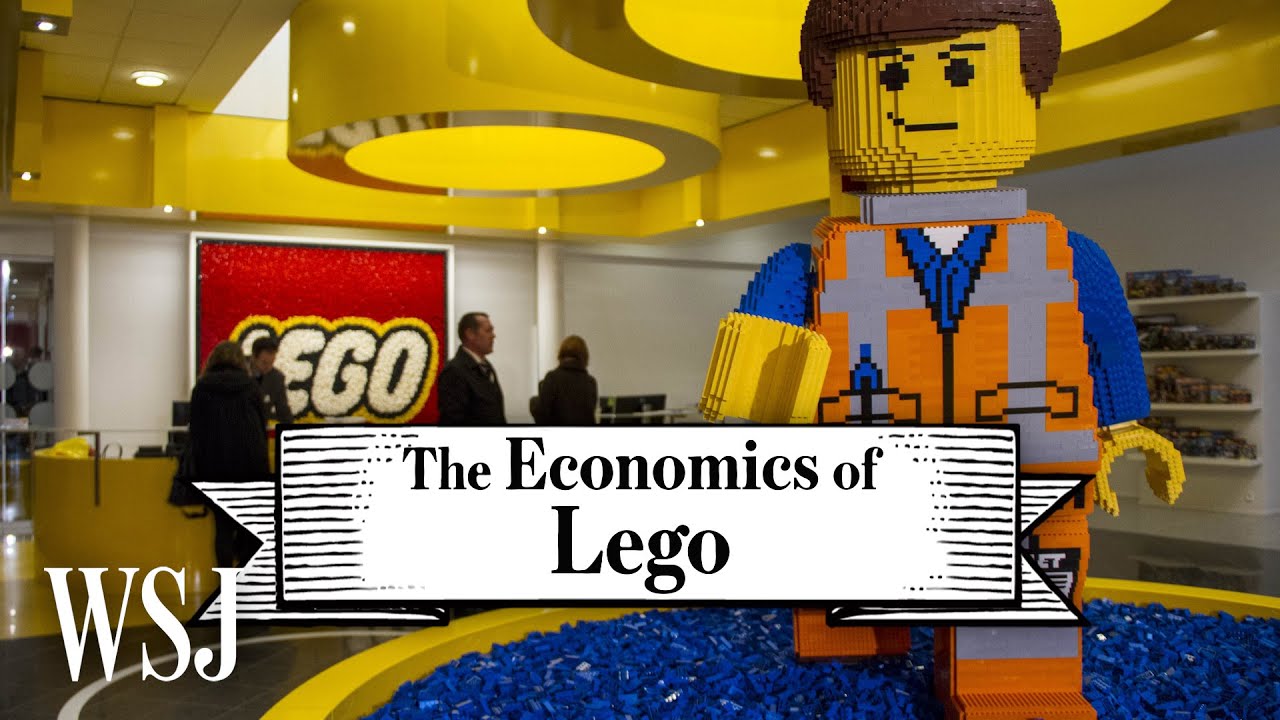
Lego's empire: discussing brand strategy and diversification
1
Think about these questions before watching. Share your ideas with a partner.
- Think of a brand you loved as a child. How has that brand changed or evolved since then, and do you think it has remained relevant?
- When a company known for one core product starts expanding into other areas like movies or theme parks, do you think it generally strengthens or weakens the brand's identity? Why?
- What challenges do you think a long-established company faces when trying to appeal to younger generations in the digital age?
2
Watch the video carefully. Pay attention to the main ideas and key details.
3
Answer these questions in your own words. Support your answers with evidence from the video.
01According to the video, what role did the Bionicle franchise play for the Lego company in the early 2000s?
Sample answerBionicle was introduced when the Lego brand was becoming a bit stale and sales were down. It was a huge success that revitalized the company by using multi-platform storytelling, showing them how to engage audiences with comics, movies, and games.
02How did Lego's content strategy evolve after its first partnership with the 'Star Wars' franchise?
Sample answerThe first 'Star Wars' short film in 2005 was a major turning point. It proved that creating content based on licensed material was a successful model, which 'paved the way' for all the future partnerships with big franchises like 'Marvel' and 'Batman'.
03Beyond its financial success, what was the main strategic purpose of 'The Lego Movie'?
Sample answerThe main goal was to market Lego to a much wider audience, not just children who play with the toys. It was so successful that it basically created a template for how Lego would create content in the following years.
04Why is creating content like movies and games particularly important for Lego's growth in markets like China?
Sample answerIt's especially important in China because most parents there didn't grow up with Lego, so they don't have any nostalgia for the brand. The movies and games help build brand awareness from scratch and make the toys familiar to new generations of families.
4
Key vocabulary for brand strategy
Vocabulary
These expressions will help you discuss the topic with more precision and fluency.
Examples
To branch out into (something) — to start doing a new and different activity or business from the one you usually do.
Usage note: This is a common phrasal verb in business. You can say a company branched out into a new area, like video games, or simply that it branched out to diversify.
To tap into a new market — to access and start selling to a new group of potential customers, especially one that wasn't accessible before.
Usage note: This phrase emphasizes successfully connecting with a customer base. It's often used with adjectives like 'untapped' or 'lucrative', for example, 'to tap into the lucrative adult fan market'.
To stay ahead of the curve — to be more innovative and advanced than your competitors by anticipating future trends.
Usage note: This is a common idiom in business and technology. The opposite would be 'to fall behind the curve'. It suggests being a leader, not a follower.
A steady stream of revenue — a reliable and continuous flow of income for a business.
Usage note: This collocation is more formal than 'making money all the time' and is useful for describing a stable business model. Companies create multiple revenue streams to ensure stability.
To leverage (something) — to use something you already have, such as a strong brand, reputation, or assets, to achieve a new advantage.
Usage note: This is a key verb in strategic discussions. For example, 'Lego leveraged its brand recognition to launch a successful movie franchise'.
5
Decide if each statement is true or false. Correct the false ones.
01The Lego company was founded in the 1950s and its first products were the famous plastic bricks.
02Lego has recognized the market for adult fans by creating more complex and expensive sets designed specifically for them.
03According to the video, all of Lego's media content is ultimately designed to support the sales of its core product, the plastic brick sets.
04While 'The Lego Movie' was a box office hit, the three subsequent feature films were even more successful financially.
05To meet growing demand, Lego is currently in the process of building new factories in both the United States and Vietnam.
6
Complete the sentences with words from the box. One word is extra.
Word bank
01A well-known company can its brand recognition to launch new products successfully.
02By investing in AI research now, the tech firm hopes to stay ahead of the and dominate the market in the future.
03The coffee shop out into selling merchandise like mugs and t-shirts to increase its sales.
04The company developed a new app to into the younger demographic, which they hadn't reached before.
05Subscription services are popular because they provide a steady of income for the company.
7
Choose the best answer based on what you heard in the video.
01What does the video mention as evidence of Lego's leading position in the toy industry?
02What recent partnership does the video highlight as part of Lego's strategy to expand beyond physical toys?
03What does the video say about the Lego company's origins?
04Which of the following strategies is NOT mentioned in the video as a reason for Lego's success?
8
Lego's Business Strategy
Test your knowledge of key phrases and collocations from the lesson.
Match each item on the left with the correct item on the right.
A
B
9
Discuss these questions with a partner. Try to use vocabulary from the lesson.
- Think of a major company from your country that has successfully branched out into new areas. How did they leverage their original brand identity to tap into new markets, and do you think this strategy has secured them a steady stream of revenue for the future?
- The video presents Lego's diversification as a huge success. However, is there a risk that a company can branch out too far from its core product? At what point does this strategy stop being innovative and start damaging the brand's original identity?
- Looking at the toy and entertainment industry today, what future trends do you see emerging? If you were a strategist for a company like Lego, what new areas would you suggest they explore to stay ahead of the curve and continue to leverage their brand effectively?