Effective meetings: discussing project updates
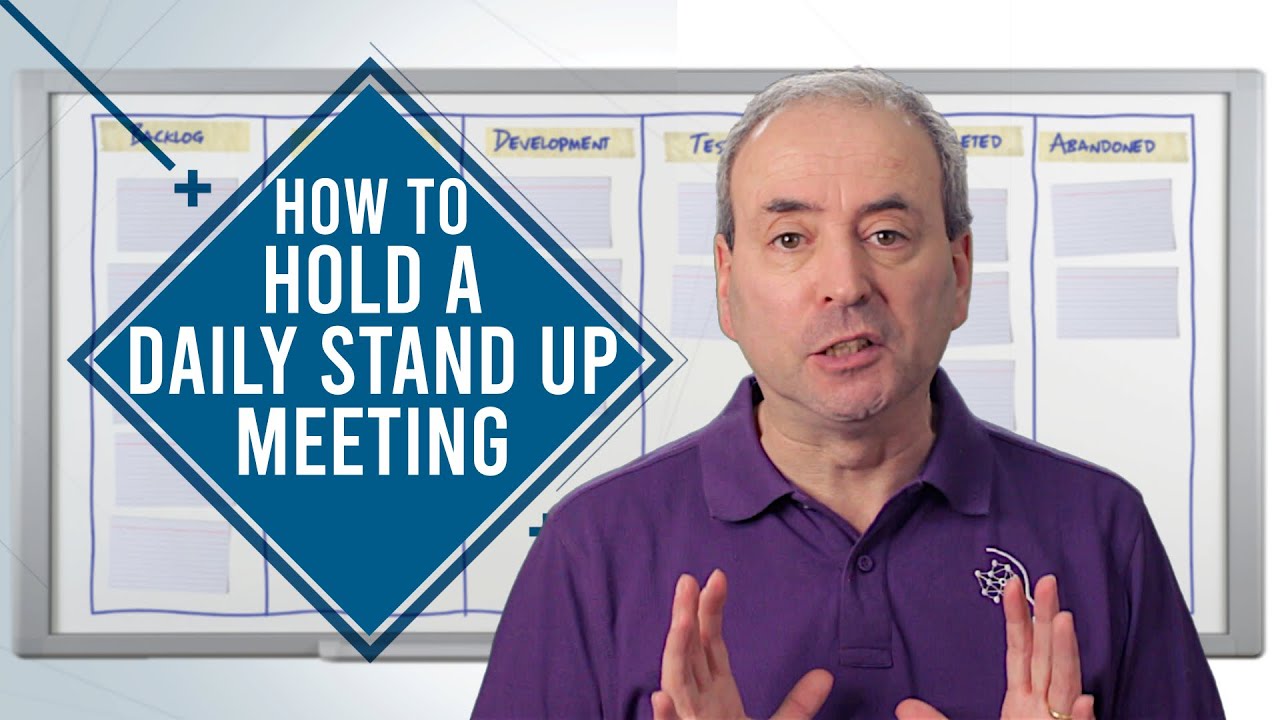
1
Think about these questions before watching. Share your ideas with a partner.
- Think about the best and worst team meetings you've ever attended. What specific factors made one successful and the other a waste of time?
- When you're part of a team project, what are the biggest challenges in keeping everyone aligned and aware of each person's progress?
- Imagine your team decided to have a short meeting every single morning. What potential benefits and drawbacks could this daily routine have on team productivity and morale?
2
Watch the video carefully. Pay attention to the main ideas and key details.
3
Answer these questions in your own words. Support your answers with evidence from the video.
01According to the video, what is the main reason for team members to physically stand up during the meeting?
Sample answerThe video explains that standing up helps keep the meeting short and focused. It's meant to stop people from getting too comfortable and relaxed, which could make the meeting take longer than the intended 15 minutes.
02What are the three specific questions that each team member answers in a 'round robin' style stand-up?
Sample answerIn the 'round robin' style, each person is asked what they accomplished yesterday, what they plan to work on today, and what obstacles or 'blockers' are getting in their way.
03How does the focus of the 'walking the board' approach differ from the 'round robin' approach?
Sample answerThe 'round robin' approach focuses on each individual person's updates. In contrast, the 'walking the board' approach focuses on the tasks themselves, starting with the work on a Kanban board and then discussing who is responsible and what might be blocking progress on that specific task.
04In what way does the speaker suggest that the stand-up meeting format itself should be 'agile'?
Sample answerThe speaker suggests the team should be flexible with the meeting format. They should regularly review how well the meeting is working and be willing to change and improve the process, especially when the team changes. It's about adapting the meeting to be as effective as possible.
4
Key vocabulary for project updates
Vocabulary
These expressions will help you discuss progress and problems more effectively in meetings.
Examples
To get someone up to speed — to give someone all the latest information about a situation or project.
Usage note: This is a common phrase in professional settings. You can say, 'Could you get me up to speed on the marketing campaign?' or 'Let's have a quick meeting to get the new designer up to speed.'
To hit a snag — to encounter an unexpected problem or difficulty.
Usage note: This is a common idiom in both business and general English. It's a slightly more informal way to say 'encounter an obstacle'. For example, 'We've hit a snag with the software integration.'
Actionable items — specific, concrete tasks assigned to one or more people as a result of a meeting.
Usage note: This is a key piece of business jargon. It emphasizes that the outcome of a meeting should be actions, not just talk. For example, 'Let's finish by summarising the actionable items from this discussion.'
To be on the same page — to have a shared understanding or agreement about a situation or plan.
Usage note: This is a very common idiom used to check for alignment within a team. It's useful for preventing misunderstandings. For example, 'Before we proceed, I want to make sure we're all on the same page.'
To touch base — to make brief contact with someone to check in or share a quick update.
Usage note: This phrase is often used to suggest a short, informal meeting or call. It's similar to 'check in'. For example, 'Let's touch base tomorrow morning to see how you're progressing.'
5
Decide if each statement is true or false based on the video. Correct the false ones.
01The 'walking the board' approach involves discussing tasks by moving from the left side of the board to the right.
02For a small team, a typical stand-up meeting should last for about 15 minutes.
03Daily stand-up meetings are only useful for teams that use agile project management.
04If a discussion goes off-topic during the stand-up, it should be stopped and continued after the main meeting if necessary.
05The main purpose of sharing 'blockers' is to report problems directly to the project manager.
6
Discuss these questions with a partner. Try to use vocabulary from the lesson.
- The video describes two stand-up styles: the 'round-robin' (person-focused) and 'walking the board' (task-focused). Which do you believe is more effective for getting a team on the same page quickly? Debate the pros and cons of each approach.
- In your country's typical work or academic culture, how comfortable are people with publicly sharing that they've 'hit a snag' or are facing a blocker? Discuss whether this transparency is generally encouraged or seen as a sign of weakness.
- If a team member uses a daily stand-up to give overly long updates instead of just touching base, it can slow everyone down. What strategies could a team leader use to manage this effectively, ensuring that longer discussions are turned into actionable items for after the meeting?