Career paths: discussing non-linear development
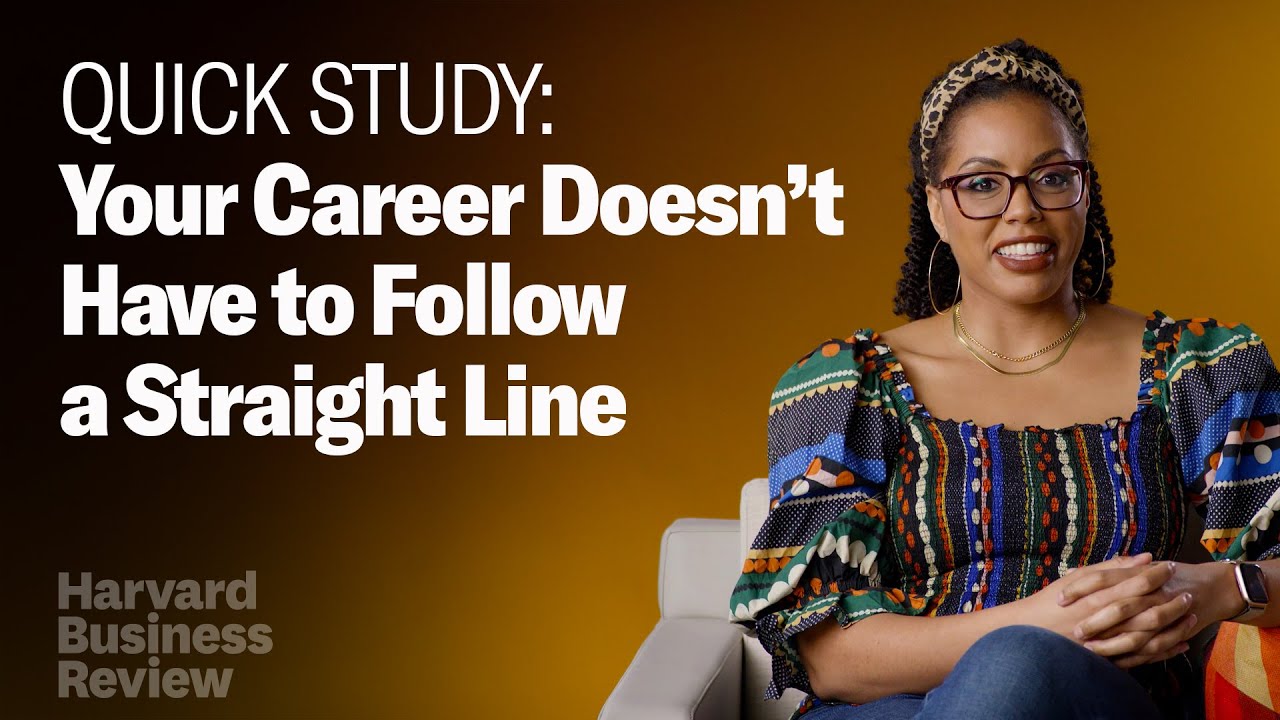
1
Think about these questions before watching. Share your ideas with a partner.
- When you imagine a 'traditional' career path, what steps or milestones come to mind?
- Besides getting a promotion, what other kinds of changes could be considered positive developments in someone's career?
- How much should personal strengths and interests influence career choices, compared to practical factors like salary or job security?
2
Watch the video carefully. Pay attention to the main ideas and key details.
3
Answer these questions in your own words. Support your answers with evidence from the video.
01According to the speaker, what is the main problem with viewing career development as a ladder?
Sample answerThe speaker says the ladder is too restrictive because it only allows you to go up or down. This suggests there's only one path to success, which doesn't give people enough options to define what success means for them personally.
02What advice does the speaker give to people who are new to the workforce and don't know their strengths yet?
Sample answerShe suggests they should act like kids on a rock wall. Instead of looking for a specific route, they should just get started and see what feels easiest. By experimenting and moving around, they can discover what they're good at in a safe environment where it's okay to fail.
03Why did the speaker consider her move to a different industry, which looked like a 'step down', to be a positive career move?
Sample answerEven though it seemed like a step back on paper, she saw it as a strategic move. She wanted to develop a specific skill—facilitation—and make it a strength. She felt this new skill was essential for her long-term goals, so it was like adding a new tool to her toolkit to help her climb the 'wall' better in the future.
04In what way can organizations create parallel career paths for employees who don't want to become managers?
Sample answerThe video suggests that companies can redefine what 'moving up' means. For someone who isn't a manager, success could be defined by taking on more responsibility in other ways. For example, they could progress from managing their own work to managing large projects, and then to leading key company initiatives. This allows them to grow and be recognized without having to manage people.
4
Key vocabulary
Vocabulary
These expressions will help you discuss career development more precisely.
Examples
Climb the corporate ladder — to advance in a company through a series of promotions to higher-level jobs.
Usage note: This is a common idiom. It often implies a very traditional and linear career path, which the speaker in the video questions.
A steep learning curve — a situation where you have to learn a lot of new information or skills in a very short amount of time.
Usage note: This is common in professional contexts. You can say 'face a steep learning curve' or 'the new role has a steep learning curve'.
Branch out into (something) — to start doing a new activity or move into a new area of work.
Usage note: This phrasal verb suggests expanding your skills or business in a new direction, much like moving sideways on the 'rock wall'. For example, 'After years in marketing, she decided to branch out into user experience design.'
Be pigeonholed — to be unfairly categorized as having only one specific skill or role, which limits your opportunities.
Usage note: This is most often used in the passive voice. It expresses the frustration of being limited. For example, 'I took the new role because I didn't want to be pigeonholed as just an administrator.'
Gain traction — to become more established, accepted, or successful.
Usage note: You can use this for an idea, a project, or a person's career. For example, 'Her career started to gain traction after she took on the international project.'
5
Decide if each statement is true or false. Correct the false ones.
01The speaker uses her own rock-climbing experience as an example, explaining that her arm strength is her greatest asset on the wall.
02The video suggests that sometimes taking a step back in your career can provide a new perspective and reveal a better path forward.
03According to the speaker, a good manager allows their employees to focus on using their strengths to navigate their career.
04The speaker points to the tech industry as a field where employees are primarily motivated by the goal of managing people.
05The main purpose of the rock wall analogy is to help people think more creatively about what success means to them in their careers.
6
Discuss these questions with a partner. Try to use vocabulary from the lesson.
- To what extent do you agree that the 'rock wall' is a better metaphor for modern careers than the traditional idea of trying to climb the corporate ladder? Are there some professions where the ladder model is still more realistic or even preferable?
- Thinking about your own country or culture, how are people who frequently branch out into new roles or industries viewed? Is there a risk of being seen as unfocused, or is it admired as being adaptable?
- Imagine a professional who feels pigeonholed in their current role. What advice would you give them for exploring a non-linear move? What challenges, such as a steep learning curve or difficulty gaining traction, should they prepare for?