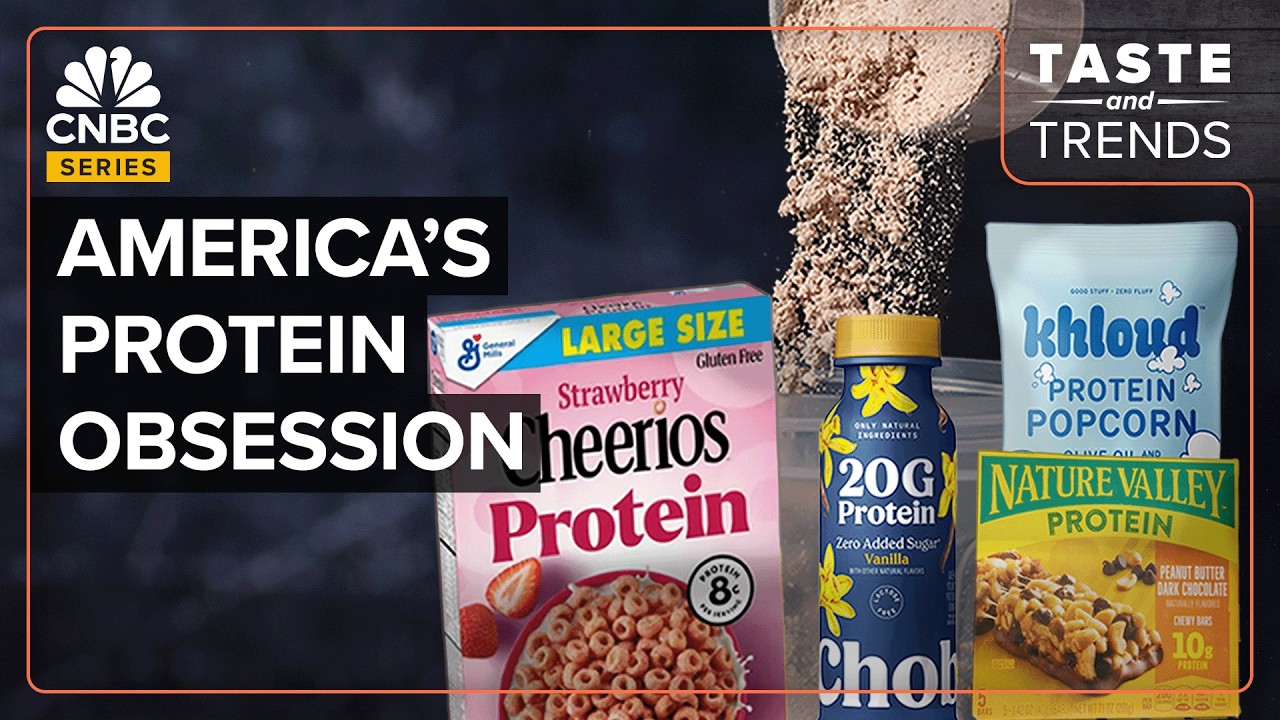
The protein boom: discussing food trends and marketing
1
Think about these questions before watching. Share your ideas with a partner.
- Beyond just high-protein products, what other food or diet trends have you noticed gaining popularity in your country lately, and what do you think is driving their appeal?
- When you're grocery shopping, how much attention do you pay to health claims on packaging, such as 'high in protein,' 'low in fat,' or 'organic'? To what extent do these claims influence your decision to buy a product?
- If you were to change your diet to be 'healthier,' what would your priorities be (e.g., eating more vegetables, less sugar, more protein)? Explain why you would focus on those particular aspects.
2
Watch the video from 3:15 to 8:00. Pay attention to the main ideas, key vocabulary, and examples in this section.
3
Answer these questions in your own words. Support your answers with evidence from the video.
01In what ways has the protein trend expanded beyond just traditional grocery store products?
Sample answerThe video shows it's not just in grocery stores anymore. Coffee chains like Starbucks and Dutch Bros. are adding protein to their drinks, and even gyms like Lifetime Fitness are creating their own supplement lines to sell to members.
02What are three key reasons mentioned in the video for the growing popularity of high-protein diets?
Sample answerThe video suggests a few reasons. First, the popularity of new GLP-1 weight loss drugs. Second, the influence of fitness influencers on social media who promote these products. And third, a general push from the government for people to be healthier.
03How does the video explain why protein has maintained a better reputation than other diet trends from the past?
Sample answerIt explains that unlike the low-fat diets of the 90s or the low-carb trend of the 2000s, protein has never really been 'villainized' or seen as a bad thing in diet culture. It's always had a positive reputation.
04What potential challenges or risks do companies face when they reformulate existing products to be higher in protein?
Sample answerThe main risk is that consumers will compare the new version to the original. They will judge if the taste or texture has changed for the worse, and they will also notice if the price is higher. If customers don't like these changes, the product could fail.
4
Vocabulary
Vocabulary
These expressions will help you communicate more naturally about this topic.
Examples
To jump on the bandwagon — to start doing something because it has become popular or successful.
Usage note: This is an informal idiom. It can sometimes have a slightly negative meaning, suggesting that someone is following a trend without real conviction.
To cater to (a demand/audience) — to provide what is wanted or needed by a particular group of people.
Usage note: This is a common business collocation. For example, 'The new protein bars are designed to cater to health-conscious consumers.'
Health-conscious — being aware of and concerned about one's own health and diet.
Usage note: This adjective is often used to describe consumers, lifestyles, or choices. You can also be 'calorie-conscious' or 'environmentally-conscious'.
To have a knock-on effect — to cause other events or situations to happen, although not directly.
Usage note: This is a great phrase for discussing cause and effect. For example, 'The rise of fitness influencers has had a knock-on effect on food marketing.'
To tap into a market — to start taking advantage of a new area of business or a new group of potential customers.
Usage note: This phrasal verb is often used in business and marketing contexts. It suggests successfully accessing a new opportunity, like how companies are tapping into the market for high-protein snacks.
5
Decide if each statement is true or false. Correct the false ones.
01The production of whey protein concentrate in the US has more than doubled over the past 20 years.
02The video identifies social media fitness influencers as one of the driving forces behind the high-protein trend.
03A single product line, Premier protein shakes, was responsible for over 80% of BellRing Brand's sales in fiscal 2024.
04The video's projection for the 2028 protein market includes all protein sources, such as meat from restaurants and high-protein snacks.
05A report cited in the video found that in 2024, more than 60% of consumers reported increasing their protein intake.
6
Complete the sentences with words from the box. One word is extra.
Word bank
01More and more consumers are reading food labels carefully to check for protein content and added sugars.
02Food companies are developing new product lines specifically to the growing demand for plant-based protein options.
03By launching a line of protein-fortified coffees, the company is trying to the lucrative market of fitness enthusiasts.
04It seems like every food company is jumping on the protein by adding it to everything from ice cream to chips.
05The rising popularity of whey protein has had a positive on the dairy industry, creating a profitable new revenue stream.
7
Choose the best answer based on what you heard in the video.
01According to the video, what role has Barilla Protein Plus played in the protein pasta market?
02What did the speaker's experiment with an AI diet planner reveal?
03The video mentions that the US protein market was valued at $89.9 billion in 2019. What is its projected value for 2028?
04Which of the following is NOT mentioned in the video as a factor contributing to the protein trend?
8
The Protein Trend
Match the beginning of each phrase or collocation with its correct ending.
Match each item on the left with the correct item on the right.
A
B
9
Discuss these questions with a partner. Try to use vocabulary from the lesson.
- The video shows how large American companies are catering to the demand for high-protein foods. Can you think of any companies in your country that have jumped on the bandwagon of a recent health trend? What products did they launch to tap into this new market?
- Some might argue that companies are simply catering to the needs of health-conscious consumers, while others might say they are creating and exaggerating the need for high-protein products just to sell more. Which viewpoint do you agree with more, and what could be the negative knock-on effects of this trend on people's eating habits?
- The video mentions the 'unprecedented' growth of high-protein products. Do you think this is a sustainable, long-term trend, or will consumers and companies eventually jump on the bandwagon of a different 'miracle' ingredient? If you were a food company executive, would you invest heavily to tap into the protein market now, or would you be more cautious?