The IKEA effect: discussing business strategy and consumer psychology
B2
60 min
Premium
1

Think about these questions before watching. Share your ideas with a partner.

  1. Think about the layout of a large store you've visited. How do you think the design is intended to influence shoppers' behaviour and encourage them to spend more time or money there?
  2. What are the pros and cons, for both the customer and the company, of selling products that require self-assembly, like flat-pack furniture?
  3. Beyond just selling a product, how do successful brands create a memorable 'experience' for their customers? Can you think of a company that does this particularly well?
2

Watch the video carefully. Pay attention to the main ideas and key details.

Video script128 segments · click a timestamp to jump

(lighthearted music)

- You know they don't tell you, "Don't lay on the bed."

You're supposed to lay on the bed.

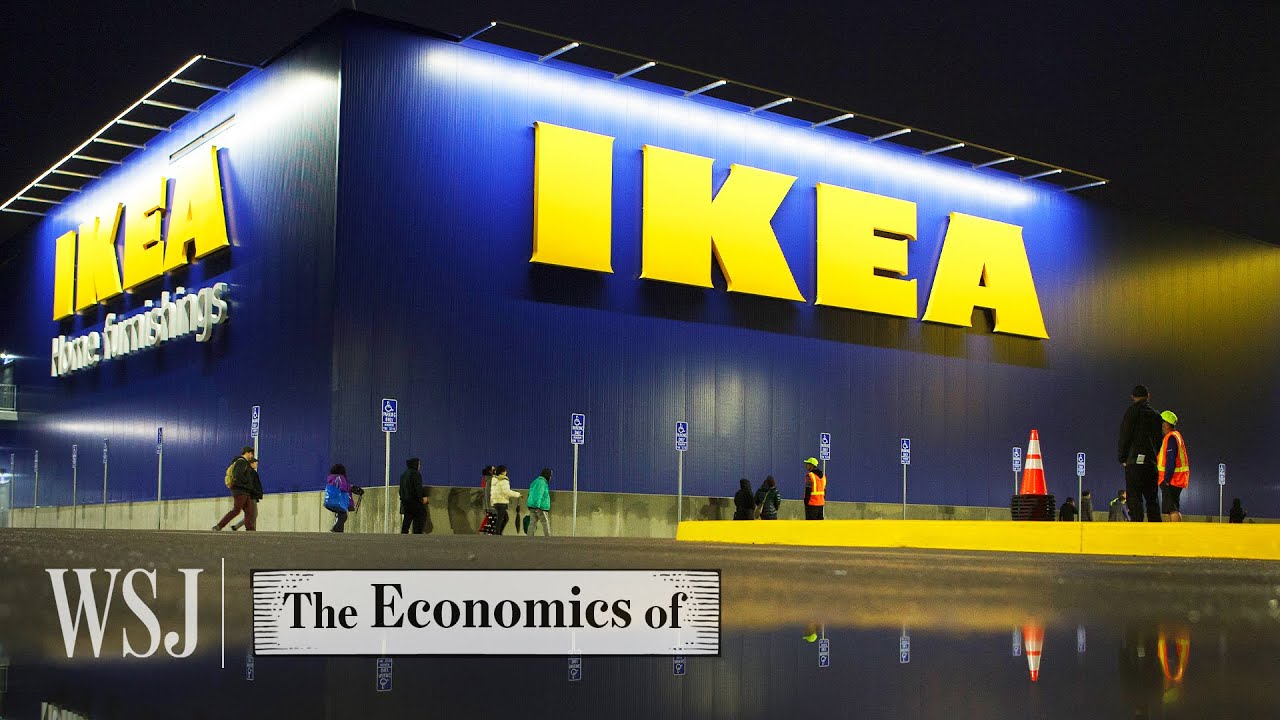
- [Narrator] If you've ever visited an Ikea,

you've likely encountered

their store's endlessly winding floor plan.

This layout can be confusing, but that is by design.

Ikea may be the biggest furniture retailer on the planet

but it's certainly not conventional.

The Swedish furniture giant asks its customers

to build their own products

and it stores and distributes those products

in minimalist flat packed boxes.

So, how have these retail strategies,

as well as their famous Swedish meatballs

contributed to the company's runaway success?

This is the economics of Ikea,

a look at the innovative business practices

that have transformed modern life.

- [Sarah] When you step into an Ikea,

you immediately sort of are put into this maze like

path of different rooms.

- [Narrator] Ikea's store layout is a fixed path design

which means there's a designated road

that all customers must follow

that guides you through the store in one direction.

- [Sarah] It's not a grab a carton of milk

and get out kind of store, it's the opposite of that.

It's very much set up to spend a day,

think about rooms you know, dream about what you really want

your bedroom to look like.

- [Narrator] The floor plan of most Ikea stores

resembles a maze that curves about every 50 feet

to keep customers curious about what comes next.

Since an average Ikea store is around 300,000 square feet

or five American football fields,

that means a lot of walking.

- An Ikea is to some frustratingly winding

but really it's laid out as an experience

to get you to buy more.

(drill buzzing)

- [Narrator] Ikea is famous

for putting its customers to work.

Unlike most furniture retailers

that sell products preassembled, many of Ikea's pieces

have to be built by their customers.

But why?

As many couples and their therapists will know

building your own Ikea cabinet can be challenging.

- The big idea behind the Ikea effect is

consumers are more attached to have more positive feelings

towards objects or things that we've put effort into.

And that we actually think

that they're more valuable because of that.

- [Narrator] The term Ikea effect was first coined in 2011

by researchers who noticed a similar phenomena

in other products and businesses.

When instant cake mixes were first introduced in the 1950s

they didn't sell well.

- And then they said, "Let's add a fresh egg."

It was this idea that we wanna feel

like we're just participating enough to not feel guilty

about taking a shortcut.

- [Man] When you make a cake from a mix which do you want?

A fresh egg cake or a cake made with dried eggs?

A higher, lighter, tastier cake, why fresh eggs of course.

- The idea that we should love building products

isn't necessarily what Ikea intended.

- [Narrator] If you've ever shopped at one of Ikea's

massive warehouse stores

you're likely aware of the unconventional product names

but what you may not realize is that in creating these items

Ikea sometimes comes up with the price tag first.

- So we have a classic example that they could talk

about all the time is the $1 light bulb.

But they had this idea that a $1 LED light bulb,

you know this new type of light bulb

would be hard to achieve, but if they could achieve it,

lots of people would buy LED light bulbs.

So they just sort of designed backward

with the price point in mind.

- [Narrator] That obsession with low prices

is a large part of why Ikea is the world's

largest furniture retailer.

Today, Ikea has 445 stores operating in 52 countries.

- You know obviously if you go into a student dorm room,

you're gonna find a lot of Ikea,

but you'll also find some Ikea products

in a wealthy person's home.

And that's really what they're going for.

- [Narrator] Today, Ikea is the very definition

of mass market appeal, but when the company first began

as a Swedish mail order business in 1943,

well-designed furniture tended to be expensive.

And as a result out of reach for most,

or seen as a serious long-term investment.

Ingvar Kamprad, who founded the company as a teenager,

pushed forward the idea that furniture could be flat packed

to massively reduce the cost of shipping and transportation.

- So flat packing is really the largest arguably

Ikea invention that really led to the company's growth.

And the idea is that instead of buying, you know,

a piece of furniture I'll put together, it's deconstructed

into a flat pack, where you can fit more in a truck.

You can fit more in the Ikea warehouse

and you can also get it in your car.

And the trade-off is you know

you put it together at the end.

- [Narrator] Flat packing is a practical aspect

of the philosophy that has long guided Ikea's success

called democratic design.

- It's this idea that everything is imbalanced

both price, form, function, the aesthetic,

the sustainability.

- [Narrator] This vision

to create a better everyday life for the many people

was sent forth more than 30 years ago by Kamprad

in a manifesto now presented to every Ikea employee.

- And they talk about it almost religiously,

and fundamentally it's this idea

that when designing a product they think about

it can't just be really cool looking,

it can't just be functional,

it has to be all of those things.

- [Narrator] So despite the long shopping trips

and the DIY, customers can't seem to get enough of Ikea.

Perhaps it's as simple as labor leaves to love.

(lighthearted music)

3

Answer these questions in your own words. Support your answers with evidence from the video.

01According to the video, what is the purpose of IKEA's 'fixed path' store layout?
Sample answerThe purpose is to make customers follow a specific, winding route through the entire store. It's designed to make you spend more time there, see all the products, and hopefully buy more than you planned. It's not for quick shopping trips.
02How does the example of instant cake mixes from the 1950s help explain the 'IKEA effect'?
Sample answerIt shows that people value things more if they put some effort into them. The cake mixes sold better when people had to add a fresh egg because it made them feel like they were participating. Similarly, building your own IKEA furniture makes you feel more attached to it.
03What is unusual about how IKEA sometimes determines the price of a new product?
Sample answerInstead of creating a product and then deciding its price, they sometimes start with a target price point first. For example, they decided they wanted to sell a one-dollar light bulb and then designed it backwards to meet that low cost.
04In what way does flat-packing furniture support IKEA's philosophy of 'democratic design'?
Sample answerFlat-packing is a key part of making furniture affordable for everyone, which is the goal of 'democratic design'. By shipping items in flat boxes, they save a lot of money on transport and storage, and those savings are passed on to the customer, making good design accessible to more people.
4

Vocabulary

Vocabulary
These expressions will help you communicate more naturally about this topic.
To gain a competitive edge — to achieve an advantage over other companies, often by offering better value, quality, or a unique experience.
Usage note: This is a common business collocation. You can say a company gains a competitive edge 'through' innovation or 'by' lowering costs.
To buy into (an idea/concept) — to fully believe in and accept a plan or philosophy.
Usage note: This phrasal verb suggests that customers don't just purchase a product, they accept the company's entire philosophy. For example: 'Shoppers have really bought into the idea of sustainable retail.'
A captive audience — a group of people who cannot leave a particular place and are therefore forced to listen to or watch something.
Usage note: This idiom can be used figuratively. IKEA's store layout creates a captive audience, encouraging customers to see every product.
By design — done intentionally; on purpose, not by accident.
Usage note: This is a slightly formal phrase used to emphasize that a situation was planned. For example: 'The confusing layout isn't a mistake; it's confusing by design.'
The customer journey — the complete experience a customer has with a company, from first hearing about it to making a purchase and beyond.
Usage note: This is a key marketing concept. Companies often try to 'map' or 'improve' the customer journey to increase sales and loyalty.
5

Decide if each statement is true or false. Correct the false ones.

01The founder of IKEA, Ingvar Kamprad, was a teenager when he established the company.
02The video states that IKEA's 'democratic design' philosophy is primarily concerned with low prices.
03IKEA originally started as a mail-order business in Sweden.
04An average IKEA store is comparable in size to five American football fields.
05The term 'IKEA effect' was invented by the company's marketing department to describe their business model.
6

Discuss these questions with a partner. Try to use vocabulary from the lesson.

  1. The video explains that IKEA's store layout is confusing by design to make people buy more. Do you consider this a brilliant business strategy or a manipulative one? At what point does influencing the customer journey become unethical?
  2. Think about a popular company in your country with a unique business model. What strategies do they use to gain a competitive edge, and how successfully have people in your culture 'bought into' their concept?
  3. IKEA effectively creates a captive audience by controlling the shopping experience. Besides retail, what other industries could successfully use a similar strategy to guide their customers? In which industries would this approach likely fail?