Career stories: narrating your professional journey
B2
90 min
Premium
1

Think about these questions before watching. Share your ideas with a partner.

  1. To what extent do you believe a career path should be carefully planned versus something that unfolds through unexpected opportunities?
  2. If you had to tell the story of your career so far, what key moments or turning points would you be sure to include?
  3. Think about someone whose career you admire. What makes their professional journey compelling or inspiring to you?
2

Watch the video from 3:15 to 6:28. Pay attention to the main ideas, key vocabulary, and examples in this section.

Video script114 segments · click a timestamp to jump

This is a story about cold emails and  that talking robot from Rocky Four.

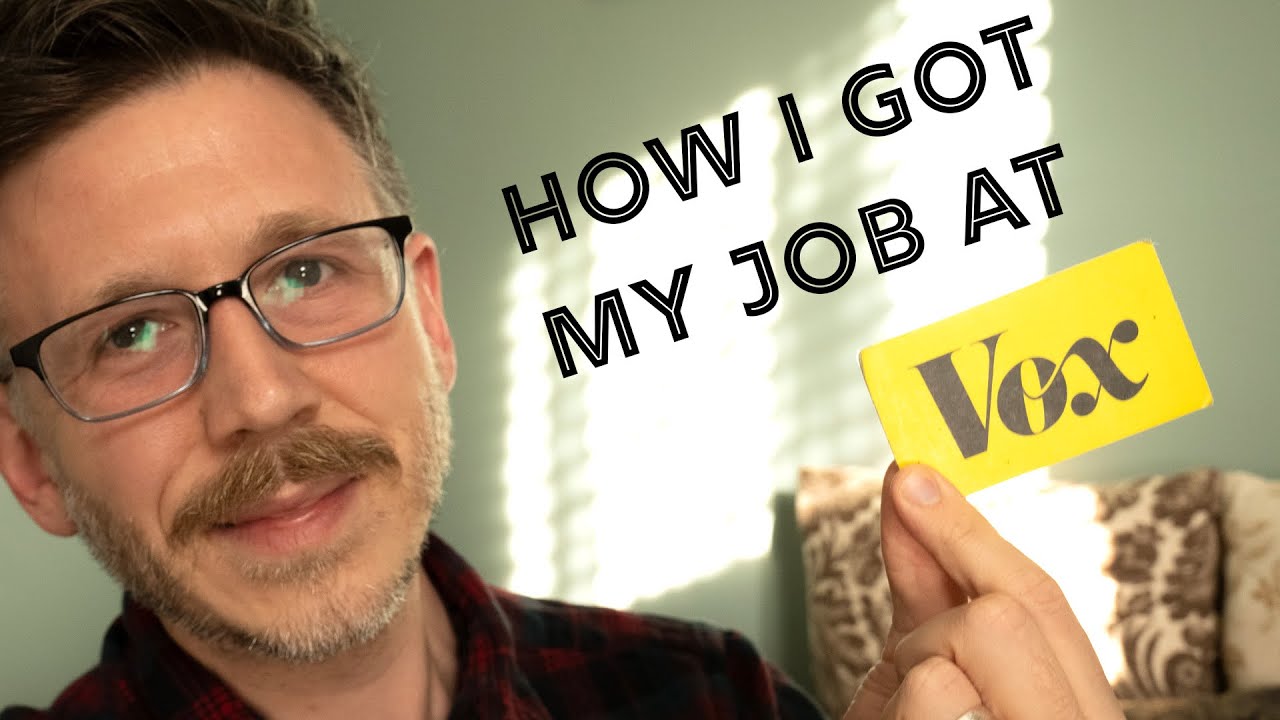
I'll clean it up for you. Paulie.. My name's  Phil Edwards. I'm a senior producer at Vox. Vox.

That's not the jingle for  Vox, but you know, why not?

This is a personal channel. So normally I talk  about personal stuff or history, whatever I want.

However, this is kind of becoming a time  management issue for me to have to share my

life story with so many people. I've got a lot  of people trying to get in touch on LinkedIn.

LinkedIn.

And I get so many queries about how I got my job.  And then I explain the long tortured story and

I've done it so many times that I'm sick  of hearing it, but I do think it's kind of

useful. So now I can send a link to this video  and then if people still want to talk to me,

they can, but they'll at  least know where I came from.

This has become an entire subgenre of YouTube  content. You can find videos from Johnny Harris,

Joss Fong, Cleo Abram, Estelle Caswell, Joe  Posner all talking about their careers. Those

are just the people that came to me off the top  of my head. I'm sure there are more who have

talked to conferences and  been on, uh, fancy panels.

I have not, but I think that is actually one of  the reasons that my input might be kind of useful.

And I'm way too close to the paper.

And I think it's helpful to hear from  somebody who is a little lower down

on the food chain, somebody without quite so  much natural talent. As sad as that is to say.

So I'm going to tell you my story  and what I think it means with the

help of some history too, because,  hey, this is personal and history.

So I want to give you that, and I'm going to  do it with the help of three famous lackeys,

the little people, because I can identify  and I think they can give us all some help.

Have you heard of Norbert Pearlroth?

Before I started at Vox. I had a blog, it was  called Trivia Happy, and it was ba- that's right.

We're doing two camera angles.  Kaboom. Watch it and learn.

I cared about trivia. I went to  the Harold Washington Library

in Chicago every single week. I checked out the  maximum number of books that you could check out

and I read them and did research and I blogged.  My beat was trivia. We're about Taft’s bathtub,

and fast food in foreign countries,  and Grover Cleveland's wedding cake.

This was kind of a Norbert Pearroth’s job too.  You know, Robert Ripley of Ripley's Believe it

or Not? It's museums that are everywhere. And also  it was an iconic newspaper column that was really,

really famous at the time. It was all sorts of  weird stuff that happened around the world, mixed

in with trivia and historical facts that sounded  untrue, but turned out to be miraculously real.

The person who found those was Norbert Pearlroth.  Pearlroth went to the New York Public Library,

Monday through Friday, and he searched for facts.

And that is basically what  I was doing every single day

at Trivia Happy. I reported too, I interviewed  the guy who created the robot in Rocky Four.

I talked to the graphic designer behind Idiocracy.  All of this stuff ended up being pretty popular.

I got thousands of hits and was mentioned  from places all over the web...and I made $0.

Here's where it's important to mention  that I am not independently wealthy.

Uh, I need money to buy things  like goods and services.

And so I took that success that  I had with Trivia Happy. And I

went looking for somewhere that might  pay me to actually do the same thing.

So I cold emailed a few different places,  including a newish site called Vox.

I told them that I really liked some of their  articles that had found a lot of success on

the site. I said that I had basically designed my  site as if Vox Media had made a site about trivia

and that was totally the truth. And improbably,  amazingly, somehow, I got a call back.

I got an interview and I ended up getting a job.

Pearlroth is the lesson. You've got to pick a  beat to slog through, through thick and thin,

through lots of traffic and zero traffic, through  all the hits, none of the hits, through big money,

no money. And somewhere in between  where you have some health insurance.

You've got to find the thing

that will keep you going through all of  that because you love it so, so much.

For me, the most interesting stories are history  and trivia and all the other forgotten things that

pervade our culture. But for you, it could  be anything, it could be foreign policy,

it could be, uh, taxes on corporations.  It could be new dental technology. I

don't know what your passion is, but find  the thing that you are Pearlrothy about.

And chase after that, because that is the  thing that is going to sustain you long enough

to actually get a job doing it.

This is Thomas Edison's electric pen.

Uh, just so you don't go crazy, basically  what it did was it punched a bunch of holes

in a piece of paper. You'd roll ink over it,

and you'd be able to effectively create copies of  the same illustration a ton of different times.

That's what it was. It was a copy machine.  As far as I understand it, Francis Jehl was

a clerk in an office and he loved the  electric pen and he basically said, ah,

God, I got to meet this dude who invented the  electric pen, Thomas Edison, whoever he is.

One day Thomas Edison came into the office.  Francis Jehl says, whoa, Edison, what's up?

Pleasure to meet you. I'd love to  work for you because your electric pen

is great. Francis Jehl became  Thomas Edison's Lackey.

He wrote his autobiography about his  time at Menlo Park. He's in videos where

he re-enacts big moments in Menlo Park history.

Back to me. I had this job as a writer in  Washington, DC. I was working for Vox now,

writing about these crazy things,  but I was not just a writer.

I was also a fan boy and I  was a fan boy in particular of

Vox video. I saw these early videos and I  thought, Ooh, these are polished. These are

good. And I wanted to associate myself  with these people in any way I could.

So I was always pitching them ideas. I was always

trying to give them scripts or interviews  that I thought might be cool. And eventually

they thought that I was such a fan boy they  wanted me to write scripts for them. Suddenly

I went from being a writer to being a part of the  video team. It wasn't totally out of the blue.

I'd done a lot of stuff with charts and graphs.  And I was always interested in visuals, but I

didn't have experience. I had passion. I was  Francis Jehl in this situation. That is going to

keep you doing the grunt work at the beginning.  I mean, I did tasks at the beginning that

weren't necessarily what I wanted to  be doing, but I was happy to do it

because I was learning constantly about how to  be a better writer and how to make better videos.

So how could I turn that down? And hopefully you will have the same opportunity.

Part three, that gets us to the  last person, Thomas A. Watson.

Do you recognize this name? You  might. I will play you a clip.

“I first met Alexander Graham Bell in 1874.”

That's right. He's the dude  who Alexander Graham bell said,

come here, Mr. Watson, to when he invented  the telephone. Thomas A. Watson was Alexander

Graham Bell's lackey. And how he got his  job is actually a pretty useful lesson.

“When he came to the shop in  Boston where I was working

to have his harmonic telegraph  constructed, the work was assigned to me.”

So that is how we met Alexander Graham  bell. Basically all these inventors were

coming through this machine shop cause they  had big ideas, but they didn't know how to

execute on them. So Watson got a front row  seat to every single inventor's big idea.

And that's why he got to meet  all those amazing people.

That is kind of how I approached  my video experience. When I came

on as a video producer, I was a script writer,  but I was anxious to learn all of the tools.

I knew a bit of Photoshop. I knew a  bit of Illustrator. I knew nothing

about Premiere. I learned how to use those  applications. I learned how to use a camera.

I learned how to record voiceover  and it was, it was painful.

The way that Thomas Watson said Bell,  I can help you realize your idea,

I found a way to help realize my own ideas, and I  think it helped give me more freedom to pursue the

things that I was Pearlrothy about. That's a word now.

Every place needs a Thomas Watson, what  Thomas Watson does, that could vary a lot.

I don't, I don't know what your Thomas Watson  skill is. Maybe it is some podcasting technique

that I've never even heard of. Maybe it's Tik  Toking. Learning skills made me someone that

they wanted to keep around and that let  the Pearlroth and Jehl parts of me shine.

I just got sick of being in the same place the  entire video. That's it for this, typically I

do personal stuff and history stuff. If that  interests you, subscribe to this channel, uh,

and like the video, if you can. We're early on so  every little bit helps. All right. Thanks a lot.

3

Answer these questions in your own words. Support your answers with evidence from the video.

01What was the main challenge the speaker faced with his popular blog, Trivia Happy?
Sample answerEven though his blog was successful and got thousands of hits, he made absolutely no money from it. He explains that he needed an income to live, so the blog wasn't financially sustainable on its own.
02In what way did the speaker connect his personal project to Vox when he contacted them for a job?
Sample answerHe told them in his email that he had intentionally designed his trivia site as if it were a Vox Media site. This showed them that he understood their style and that his work would be a good fit for their company.
03According to the speaker, why is it so important to be 'Pearlrothy' about a topic when trying to build a career?
Sample answerIt's important because that deep passion is what will keep you going through the difficult times. He mentions periods of 'zero traffic' and 'no money,' and says that loving the subject is the only thing that will sustain you long enough to eventually succeed.
04How does the story of Francis Jehl and the electric pen illustrate the main lesson the speaker is trying to share?
Sample answerThe story is a practical example of his main point. Francis Jehl was so passionate about a specific invention, the electric pen, that he took the initiative to speak to the inventor, Thomas Edison, which led to him getting a job. His passion created his career opportunity.
4

Key vocabulary for career paths

Vocabulary
The video uses some great expressions. Here are a few more to help you discuss career journeys and professional development.
to land a job — to succeed in getting a job, especially one that is difficult to get.
This is a common and slightly informal collocation. It emphasizes the achievement. You can also 'land an interview', 'land a promotion', or 'land a contract'.
side hustle — a job or project that you do in addition to your main job, often for passion or extra income.
This is a modern and popular term. The speaker's blog started as a passion project, which is a type of side hustle that he successfully turned into a full-time job.
to get your foot in the door — to get an entry-level position or first opportunity in a company or industry, which can lead to better opportunities in the future.
This is a common idiom. The speaker's 'cold email' to Vox was his attempt to get his foot in the door in the professional online media world.
to pay off — to result in success or a good outcome after a period of effort.
This phrasal verb is often used to describe the positive result of long-term dedication. For example, 'All his hard work on the blog eventually paid off.'
to carve out a niche — to create a specialized and successful role or position for yourself in a particular field or market.
This phrase suggests being strategic and finding a unique area where your skills are valuable. The speaker carved out a niche by focusing on history and trivia.
5

Read the statements below. Decide if they are true or false based on the video, and correct the false ones.

01The speaker's blog was successful in terms of audience size but generated no income for him.
02In his email to Vox, the speaker claimed that his trivia site was more popular than theirs.
03The speaker believes passion is crucial because it provides the motivation to persist through periods of little or no success.
04Francis Jehl was an admirer of the electric pen who later hired its inventor, Thomas Edison, to work for him.
05The story of Francis Jehl illustrates how enthusiasm for someone else's work can lead to a career opportunity.
6

Complete the sentences with words from the box. One word is extra.

Word bank
01Despite facing several rejections, her eventually paid off, and she landed her dream job.
02While he loved being an artist, he needed a more career to support his family, so he started looking for jobs in graphic design.
03Before the interview, she spent hours updating her online with her latest projects to showcase her skills.
04Making the from a junior employee to a management role required him to develop a new set of leadership skills.
05Attending industry conferences is a great way of and meeting potential employers or collaborators.
7

Choose the best answer based on what you heard in the video.

01What was a key element of the speaker's successful job application strategy when he contacted Vox?
02According to the speaker, what is the main purpose of finding a topic you are "Pearlrothy" about for your career?
03What specific role did Francis Jehl take on after meeting Thomas Edison?
04Based on the speaker's personal story and advice, which of the following is NOT a recommended strategy for building a career?
8

Phrases for career stories

Complete the sentences about career development.

Match the beginning of each sentence on the left with the correct ending on the right.

Drag or click to match
Definitions
9

Discuss these questions with a partner. Try to use vocabulary from the lesson.

  1. The speaker mentions his blog, which he had before his current job. How important do you think having a 'side hustle' or personal project is for someone trying to carve out a niche in a competitive field? Do you think this strategy always pays off?
  2. In the video, the speaker suggests his story is useful because he isn't a superstar. Do you agree that hearing career stories from 'ordinary' people is more helpful than from famous CEOs or celebrities? In your culture, which type of story is more popular?
  3. With platforms like LinkedIn, it's common for professionals to share their career journey publicly. To what extent is this pressure to have a perfect 'story' helpful for landing a job, versus just adding stress for people trying to get their foot in the door?