Imposter syndrome: discussing self-doubt and building confidence
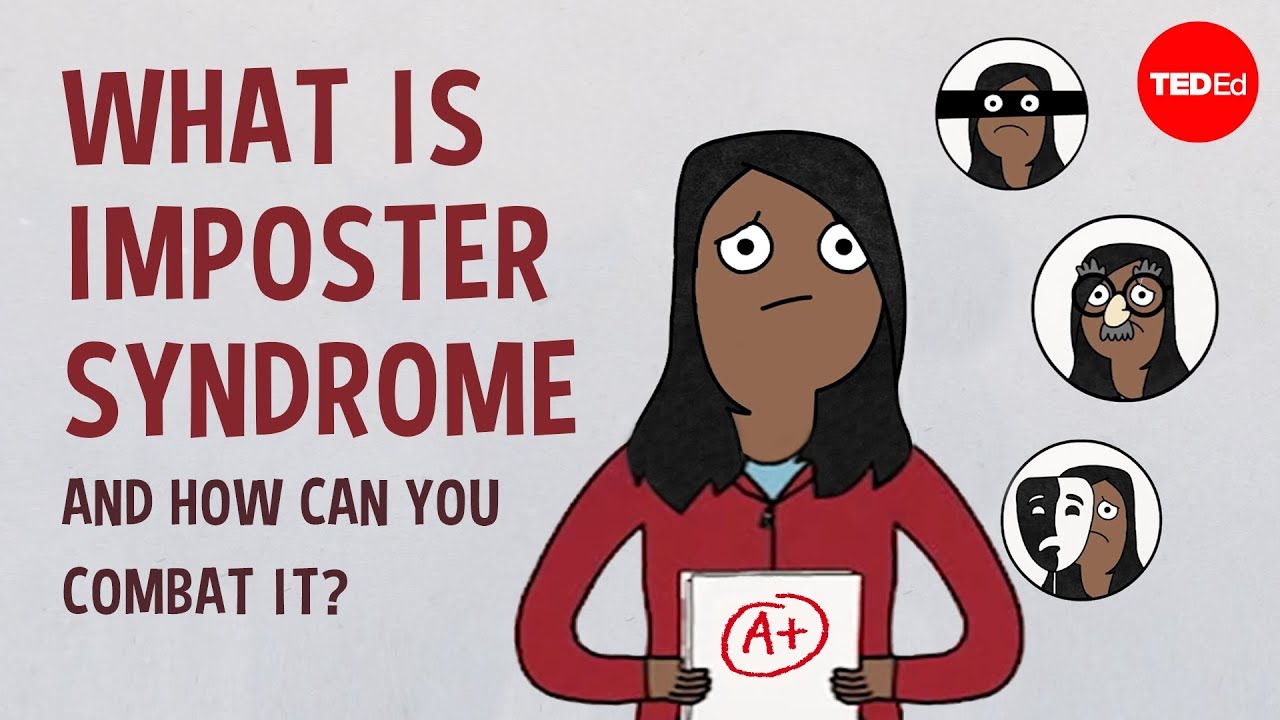
1
Think about these questions before watching. Share your ideas with a partner.
- Describe a time when you achieved something significant, but still felt like you weren't truly qualified or deserving of the praise. What was that experience like?
- In what situations, such as at work or school, are you most likely to compare your skills and abilities to those of others? How does this comparison typically make you feel?
- Why do you think some highly successful people might secretly feel like they are 'faking it' or that their success is just a matter of luck?
2
Watch the video carefully. Pay attention to the main ideas and key details.
3
Answer these questions in your own words. Support your answers with evidence from the video.
01According to the video, what surprising feeling did both Maya Angelou and Albert Einstein share despite their great success?
Sample answerThey both felt like they were frauds who hadn't truly earned their accomplishments. Einstein even called himself an 'involuntary swindler' because he felt his work didn't deserve so much attention.
02Why does the video suggest that calling this phenomenon a 'syndrome' might be misleading?
Sample answerThe video explains that calling it a 'syndrome' makes it sound like a disease or an abnormality. However, the feeling is actually extremely common and universal, not necessarily linked to a medical condition like depression or anxiety.
03In what way does 'pluralistic ignorance' contribute to feelings of imposterism?
Sample answerIt contributes because everyone doubts themselves privately but believes they are the only one feeling that way. Since people don't usually voice their doubts, we assume everyone else is more capable and confident than we are, which makes our own feelings of inadequacy worse.
04Besides talking to others, what is a practical strategy the video suggests for actively challenging one's own feelings of fraudulence?
Sample answerOne strategy is to collect and review positive feedback you've received. Another is to document facts, like the scientist who tracked the causes of problems in her lab and realized most weren't her fault, which helped her recognize her own competence.
4
Vocabulary
Vocabulary
These expressions will help you communicate more naturally about this topic.
Examples
A nagging doubt — a persistent and worrying feeling of uncertainty
Usage note: the adjective 'nagging' describes something that is annoying because it won't go away. You can also have a 'nagging feeling' or a 'nagging voice in your head'.
To live up to expectations — to be as good as or achieve what people hope for
Usage note: this phrase is often about pressure. You can live up to your own expectations, someone else's expectations, or 'the hype' around something.
To second-guess oneself — to question or doubt a decision or action you have already taken
Usage note: this describes a common habit for people who lack confidence. For example, 'I chose the right answer, but then I second-guessed myself and changed it.'
To feel out of one's depth — to feel unable to cope in a new or difficult situation
Usage note: this is a common idiom to express feeling unqualified or overwhelmed. For example, 'Everyone in the meeting was an expert, and I felt completely out of my depth.'
To give yourself credit — to acknowledge and praise your own achievements or good qualities
Usage note: this is often used as advice for people who are too critical of themselves. The opposite is 'to be too hard on yourself'.
5
Decide if each statement is true or false. Correct the false ones.
01The first research on imposterism was conducted on a diverse group including various genders and occupations.
02The video suggests that imposter syndrome is not considered a mental illness and isn't always linked to issues like anxiety.
03The psychologist who first studied this phenomenon was partly inspired by observing her students' feelings of inadequacy.
04According to the video, only people who are exceptionally talented are prone to feeling like imposters.
05The video proposes that while we can manage feelings of imposterism, it may not be possible to get rid of them completely.
6
Complete the sentences with words from the box. One word is extra.
Word bank
01Despite the promotion, she couldn't shake the feeling that she wasn't qualified for the new role.
02He felt immense pressure to the high expectations set by his successful parents.
03It's common to your decisions when you're feeling insecure, but you have to trust your judgment.
04Starting a new job in a completely different industry can make you feel out of your for the first few months.
05You've worked so hard on this project; you really need to give yourself more for what you've achieved.
7
Choose the best answer based on what you heard in the video.
01According to the video, what is a potential negative consequence of intense feelings of imposterism?
02Why might highly accomplished people, like those mentioned in the video, experience imposter syndrome?
03What was the initial observation that led psychologist Pauline Rose Clance to study this phenomenon?
04The video suggests several ways to combat imposter syndrome. Which of the following strategies is NOT recommended?
8
Understanding Imposter Syndrome
Test your knowledge of vocabulary and concepts related to imposter syndrome.
Match each item on the left with the correct item on the right.
A
B
9
Discuss these questions with a partner. Try to use vocabulary from the lesson.
- In your culture, is it more common to be humble or to celebrate your achievements openly? How might this cultural norm affect whether people give themselves credit or experience a nagging doubt about their success?
- The video suggests that calling this feeling a 'syndrome' is misleading because it's a universal experience, not a medical condition. Do you agree with this perspective, or do you think giving it a name helps people feel validated and manage the feeling better?
- Imagine a manager wants to help a talented employee who often second-guesses themselves and seems to feel out of their depth on new projects. What advice would you give the manager to help this person build confidence without adding pressure to live up to high expectations?