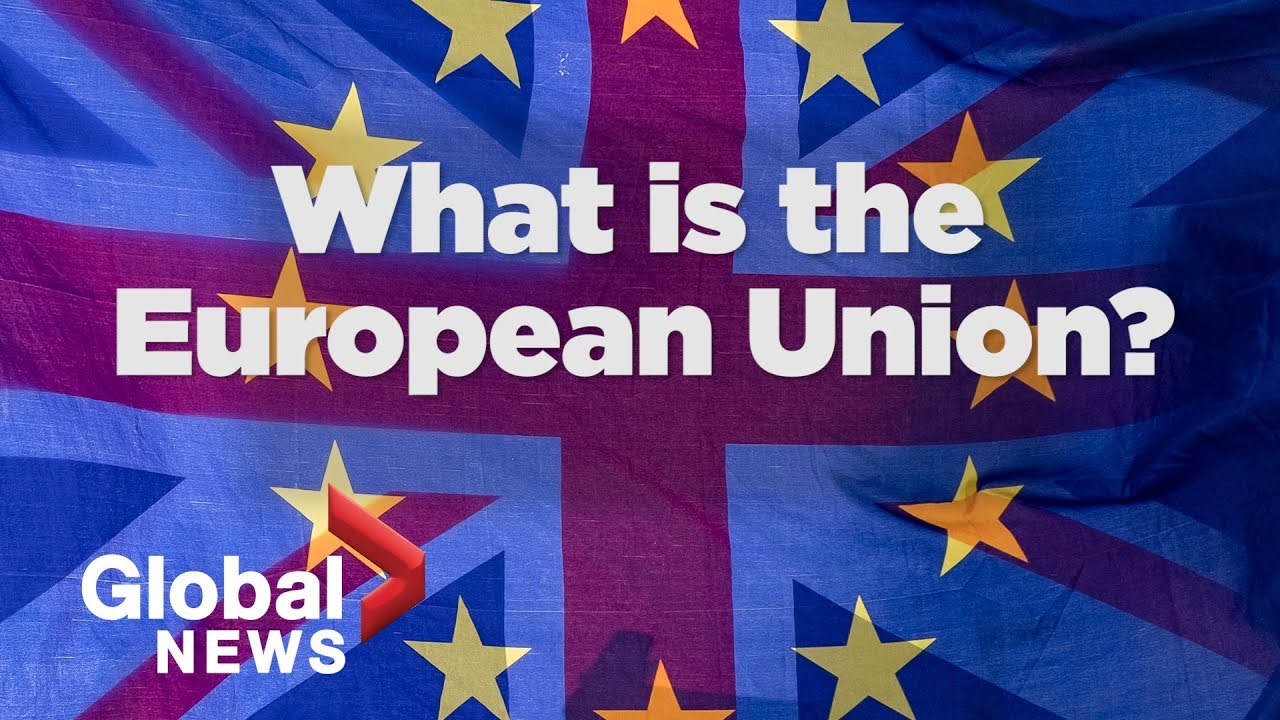
What is the EU?

B2
60 min
Free
1

Think about these questions before watching the video.

  1. Imagine a world where you could easily live, work, or study in any country within a large group of nations without needing special visas or permits. What do you think would be the biggest advantages and disadvantages of such a system for individuals and for the countries involved?
  2. The video touches on the idea of a 'European' identity. Do you think it's possible for people to feel a strong connection to both their own country and a larger regional identity, like 'European' or 'African'? What factors might strengthen or weaken such a dual identity?
  3. When countries decide to work very closely together, especially on economic matters, what kinds of benefits do you imagine they hope to achieve? On the other hand, what potential difficulties or disagreements might arise from such deep integration?
2

You only need to watch the highlighted section below — the exercises focus on this part.

You only need to watch 0:002:17. The exercises focus on this part.
Video script71 segments · click a timestamp to jump

when the second world war ended in 1945

europe was in ruins for the second time

in less than three decades there was a

consensus something had to be done

a leading champion of european unity was

the man who led britain through the war

we hope to see a europe

where men of every country

will think as much

of being a european

as a belonging to their native land

but it was six other nations most

importantly france and germany that

established the european coal and steel

community in 1951

by design it intertwined economies of

nations that had been at war to ensure

peace would make more economic sense

than conflict

further integration followed with a new

name the european economic community

internal customs duties were removed and

policies on agriculture energy and

justice were coordinated

in the 70s the uk somewhat reluctantly

joined as part of the first expansion

and european parliament elections were

held for the first time

in the 90s the bloc was trading in many

ways as if it were a single nation the

concept of european citizenship was

formed

europeans could freely travel do

business and live anywhere within the

community

at the turn of the century 11 of the 15

members locked their currencies together

to form the euro the uk opted out

2004 saw the eastward expansion 10 new

members joined most of them former

soviet bloc countries it was a high

point in pro-eu sentiment across the

continent

in the years that followed the eu had to

roll back proposed changes after voters

in some countries rejected them

in 2008 the global financial crisis

nearly brought the single currency to

its knees the affected member states

were hamstrung unable to devalue their

currency to kick-start their economies

bailouts and austerity programs were

hugely controversial sowing doubts about

the merits of the single currency and

the eu as a whole

the eu is now a 28-member club as the uk

tries to leave its economy remains one

of the top three within the eu alongside

the two main founding members germany

and france

britain is a net contributor funding and

supporting key institutions and is seen

as an important link to the

english-speaking world

these days winston churchill is the

epitome of british power a hero to those

who want to see the uk leave

one wonders what the champion of a

united europe would make of this

never-ending mess redmond shannon global

news london

3

Answer these questions in your own words. Support your answers with evidence from the video.

01What was the main motivation for establishing the European Coal and Steel Community in 1951?
Sample answerThe primary motivation was to ensure peace after World War II. The idea was to intertwine the economies of nations that had been at war, like France and Germany, so that peace would be more economically beneficial than conflict.
02How did the European Economic Community (EEC) further integrate member nations beyond the initial goals of the European Coal and Steel Community?
Sample answerThe EEC deepened integration by removing internal customs duties between member states. It also coordinated policies on important areas such as agriculture, energy, and justice, which was a step beyond just intertwining economies for peace.
03In what ways did the concept of European citizenship, formed in the 1990s, change the lives of people within the community?
Sample answerWith the concept of European citizenship, people gained significant freedoms. They could freely travel, do business, and live anywhere within the community without restrictions, which made it feel more like a single nation.
04According to the video, what significant challenges did the global financial crisis of 2008 create for the single currency and the EU?
Sample answerThe 2008 financial crisis nearly caused the single currency, the euro, to collapse. Member states that were affected couldn't devalue their currency to boost their economies, which made things very difficult. The controversial bailouts and austerity programs also led to doubts about the value of the euro and the EU as a whole.
4

Vocabulary

Vocabulary
These expressions will help you communicate more naturally about this topic.
intertwined economies — economies that are closely connected and dependent on each other, often through trade and investment.
Usage note: This phrase is commonly used in discussions about globalization, economic unions, or international relations to describe countries whose financial health is linked.
foster peace and stability — to help develop or encourage a state of calm, security, and absence of conflict.
Usage note: This is a formal collocation often found in political speeches, international agreements, and mission statements of organizations like the EU, highlighting their foundational goals.
single market — an area comprising several countries that functions as one large market, ensuring the free movement of goods, services, capital, and people.
Usage note: This is a key concept when discussing economic integration, particularly within the European Union. It implies unified regulations and standards across member states.
national sovereignty — the full right and power of a governing body over itself, without any interference from outside sources or bodies.
Usage note: This term is central to debates about international cooperation versus national independence. Countries might 'pool' or 'cede' aspects of their sovereignty when joining supranational organizations.
tackle challenges — to deal with or confront difficult problems or situations directly and with determination.
Usage note: This is a versatile and common phrasal verb collocation used in both formal and informal contexts when discussing how organizations, governments, or individuals address issues, from economic crises to social problems.
5

Understanding key concepts of the EU

Test your knowledge of important terms related to European integration.

Match each item on the left with the correct item on the right.

A
B
6

Match each word on the left with its natural partner on the right.

A
B
7

Words to take with you

Vocabulary
These expressions are not in the video but will help you discuss this topic more fluently.
supranational organization — an international organization where member states cede some power to the organization, which can make decisions binding on them.
Use this term to describe the unique nature of the EU, where decisions made at the European level can directly affect national laws and policies, distinguishing it from purely intergovernmental bodies.
common foreign and security policy (CFSP) — a coordinated approach by EU member states to external relations and defense, aiming to strengthen the EU's voice in the world.
This phrase is useful when discussing how EU countries try to act together on global issues, such as diplomacy, sanctions, or peacekeeping missions, rather than each country acting alone.
economic bloc — a type of trade agreement, often a free trade area or customs union, formed between countries to promote trade and economic cooperation.
You can use this to refer to the EU's collective economic power and its internal trade arrangements, highlighting its role as a major player in global commerce.
harmonize regulations — to make different rules, laws, or systems consistent or compatible across various regions or countries.
This phrase is frequently used when discussing how the EU ensures fair competition and the free movement of goods, services, capital, and people by making sure member states' rules align.
democratic deficit — a perceived lack of proper democratic accountability or legitimacy in the functioning of a political institution or organization.
This term is often used in debates about the EU to discuss criticisms regarding the power of unelected bodies, or the feeling that citizens are too far removed from decision-making processes.
8

Complete the sentences with words from the box. One word is extra.

Word bank
01One of the core ideas behind the European Union was to create among member states, making war less likely due to mutual dependence.
02For decades, the European Union has worked to across the continent, especially among countries with a history of conflict.
03The establishment of a within the EU allows for the free movement of goods, services, capital, and people, boosting trade and competition.
04Debates often arise regarding the extent to which membership in a supranational organization impacts a nation's , particularly concerning legislative power.
05Member states often pool resources and coordinate policies to such as climate change, migration, or economic downturns more effectively.
9

Useful phrases: Discussing international cooperation and global challenges

Vocabulary
When discussing global issues, whether in a formal debate or a casual conversation, it's important to have phrases that allow you to express agreement, disagreement, nuance, and solutions. These phrases will help you articulate your thoughts on topics like economic integration, peace efforts, and national interests.
When we consider global issues, it's clear that international cooperation plays a vital role. — Use this to introduce a general statement about the importance of working together before diving into specific examples or arguments.
Register: Neutral. Use at the beginning of a discussion or when shifting to a new aspect of the topic.
I think it's undeniable that efforts to foster peace and stability are crucial for progress. — Use this to strongly agree with a point or to emphasize the importance of peace and security as a foundation for other developments.
Register: Neutral. Use when expressing strong agreement or highlighting a universally accepted positive goal.
It's fascinating how intertwined economies have become, making collaboration almost a necessity. — Use this to comment on the interconnectedness of global markets and how it drives the need for countries to work together.
Register: Neutral. Use when discussing economic integration and its implications for international relations.
While the idea of a single market is appealing, we also need to consider the implications for national sovereignty. — Use this to present a balanced view, acknowledging the benefits of a concept while also raising potential drawbacks or complex challenges.
Register: Neutral/Slightly formal. Use when discussing trade-offs or conflicting principles, showing a nuanced understanding.
To effectively tackle challenges like climate change or pandemics, a coordinated international response is essential. — Use this to propose a course of action or stress the importance of collective effort when addressing specific global problems.
Register: Neutral. Use when suggesting solutions or emphasizing the necessity of working together on urgent issues.
Ultimately, finding a balance between national interests and collective goals is key to successful international cooperation. — Use this to summarize a complex discussion or offer a concluding thought on the inherent difficulties and necessary compromises in global partnerships.
Register: Neutral. Use to wrap up a point or provide a final, reflective statement on the topic.
10

The European Union: Aims and evolution

The European Union is a unique political and economic union. This passage explores its foundational goals and ongoing journey.

Fill in each blank with the correct word from the word bank.

Word bank
The European Union was established with the primary goal to peace and stability among its member states, particularly after centuries of conflict. By creating economies, the founders aimed to make war economically undesirable, fostering a sense of shared destiny. A key achievement has been the development of a market, allowing for the free movement of goods, services, capital, and people across borders. This extensive cooperation, however, often discussions about national and the extent of centralized power. Today, the EU continues to challenges such as climate change, economic disparities, and global security threats, demonstrating its evolving role on the world stage and its commitment to collective action.
11

Complete the sentences with words from the box. One word is extra.

Word bank
01One of the core principles of the European Union was to create deeply among its member states to prevent future conflicts.
02The primary goal of many international organizations is to in regions prone to conflict.
03The concept of a is central to the EU, enabling unrestricted movement of goods, services, capital, and people.
04Critics of deeper European integration often argue that it erodes the of individual member states.
05Global issues like climate change and pandemics require international cooperation to effectively .
12

Discuss these questions with a partner. Try to use vocabulary from the lesson.

  1. Do deeply intertwined economies always foster peace and stability?
  2. Is national sovereignty always worth sacrificing for a single market?
  3. What challenges might your country face in a similar single market?