Why Pizza Hut Failed in the US but Won in China
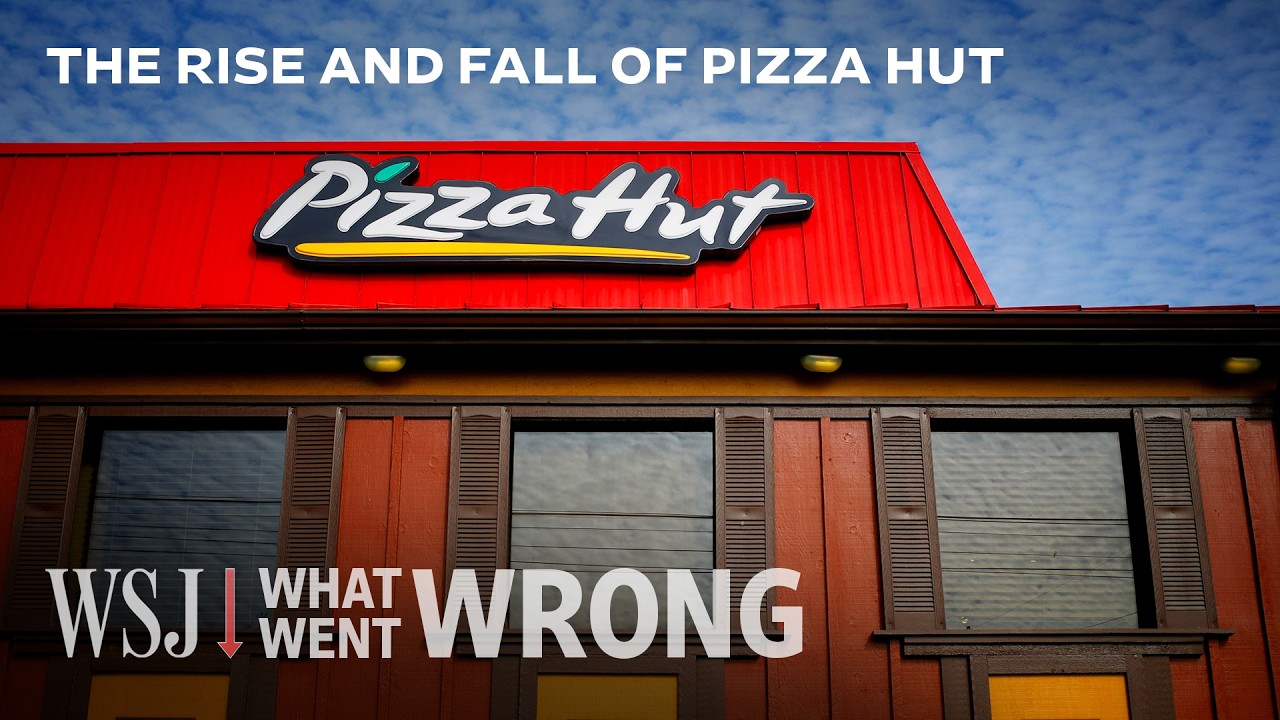
B2
90 min
Free
1

Think about these questions before watching.

  1. Think about a global fast-food chain or restaurant that operates in your country. In what ways has it adapted its menu, marketing, or even its restaurant design to appeal to local tastes and preferences?
  2. Imagine you are a business consultant advising a well-known international brand on expanding into a new, culturally distinct market. What are the top two or three cultural factors you would advise them to research thoroughly before launching, and why?
  3. Some global brands maintain a very consistent image and product worldwide, while others localize significantly. What are the potential advantages and disadvantages of each approach when trying to succeed in diverse international markets?
2

Watch the video carefully. Pay attention to the main ideas and key details.

Video script62 segments · click a timestamp to jump

♪ Hut, hut, bring the Pizza Hut ♪

- Pizza Hut was once a beloved family restaurant,

known for its checkered tablecloths,

red roofs, and crispy pan pies.

And for decades,

it was the biggest pizza chain in the world.

But now, after years of struggling to keep up,

Pizza Hut will be sold by parent company, Yum! Brands,

in a $2.7 billion deal.

So what went wrong?

In 1969, Pizza Hut went public.

And two years later became the world's largest pizza chain.

Then in 1977,

they sold the company to PepsiCo for $320 million.

This was PepsiCo's first entry into the restaurant business

and was later spun off in 1997,

into what became known as Yum! Brands.

- A lot of people have seen those red roof restaurants,

which was traditionally a dine-in concept.

And it was a place that families could come, sit down,

and where you could get pizza and soda and drinks.

So they're known for this really crispy pan pizza.

They also were known for the meat lovers pizza.

They are credited with inventing stuffed crust.

- It's wrong, isn't it?

- But it feels so right.

- Then it's a deal.

- Yes! We eat our pizza the wrong way.

- Crust first.

- But in the decades since, the pizza wars have heated up.

- Pizza Hut was so focused on its dine-in business,

but more people are looking for to-go food.

So delivery, takeout, Pizza Hut just wasn't as strong there,

particularly when you compare it to Domino's,

which has really been all about delivery forever.

Domino's became dominant,

and really hasn't gotten away from its edge since.

- Consumer taste is also changing.

The fast food pizza market in the US has stagnated

over the past two years.

Pizza Hut became a drag on earnings, and in November, 2025,

Yum! Brands began to explore selling Pizza Hut.

At the time, Pizza Hut was the second largest pizza chain

in the US, with $5.6 billion in domestic sales,

making up 40% of global sales.

Now, private equity firm,

LongRange Capital will buy Pizza Hut for about $1.5 billion.

- It does seem like a win for Yum! Brands,

because a lot of analysts weren't expecting this much money.

- Meanwhile, Yum! China

will buy the mainland China business.

That's because Pizza Hut is huge in China.

It's the largest casual dining brand in the country,

reaching $2.3 billion in sales last year.

- They were early to China,

and they're just as not as much competition for pizza there.

So it is kind of a novelty.

They've also really tailored their menu in China

to what Chinese consumers want.

I don't think this private equity firm

would be paying this much money

if they were just gonna let it die.

3

Vocabulary

Vocabulary
These expressions will help you communicate more naturally about this topic.
keep up with the competition/trends — to manage to do as much or as well as other people or things, especially in a competitive environment.
Use this phrasal verb when discussing how businesses must adapt to stay relevant. It's often followed by "the pace," "the times," or "rivals." (Register: neutral/business casual)
adapt to local tastes — to change a product, service, or strategy to suit the specific preferences, customs, and cultural norms of people in a particular region or country.
This phrase is crucial when discussing international market entry and success. It highlights the importance of cultural sensitivity in business. (Register: business/neutral)
gain an edge over rivals — to achieve an advantage or a superior position compared to competitors in a market or industry.
Use this to talk about competitive strategy. Businesses often try to "gain an edge" through innovation, pricing, or better service. (Register: business/neutral)
market penetration — the extent to which a product or service is recognized and bought by customers in a particular market. High market penetration means many people are using it.
This term is used to measure a company's success in reaching its target customers. It's a key metric in business expansion and growth. (Register: formal/business)
shifting consumer preferences — changes in what customers like, want, or choose to buy over time, often leading to new demands or a decline in old ones.
This phrase is useful for explaining why certain products succeed or fail. Businesses must constantly monitor "shifting consumer preferences" to remain competitive. (Register: business/neutral)
4

Global business strategies: matching

Understanding global markets requires specific vocabulary. Match each beginning of a sentence with its correct ending to complete the ideas about international business.

Match each item on the left with the correct item on the right.

A
B
5

Use the word in brackets to form a new word that fits each gap.

01
Successful global brands demonstrate great to local tastes and cultural nuances.
02
Domino's gained a significant edge over its by focusing heavily on a delivery-first strategy.
03
The video highlights how consumer preferences led to a decline in traditional dine-in restaurant models.
04
Achieving high market in new regions requires a deep understanding of the target audience's needs.
05
After years of , Pizza Hut was eventually sold by its parent company, Yum! Brands.
06
The company's in the Chinese market contrasts sharply with its challenges domestically in the US.
6

Useful phrases: Discussing international market strategies and consumer trends

Vocabulary
In a globalized world, understanding how businesses succeed or fail across different countries is vital. These phrases will help you discuss market strategies, consumer behavior, and the importance of cultural adaptation in a professional setting, like a business meeting or presentation.
One crucial aspect to consider is how vastly consumer preferences can shift across different markets. — This introduces a point about the variability of customer tastes globally.
Register: Formal/neutral. Use when opening a discussion or introducing a key factor related to market differences.
It's absolutely critical that we adapt to local tastes if we want to achieve strong market penetration. — This emphasizes the necessity of tailoring products/services to specific cultural contexts.
Register: Formal. Use to stress the extreme importance of cultural adaptation for business success in a new region.
To truly gain an edge over rivals, we need to focus on keeping up with the latest digital trends in each region. — This suggests a strategy for competitive advantage by staying current with market developments.
Register: Formal. Use when proposing a specific action to outperform competitors, linking to trends and regional differences.
While I agree we need to expand, we must be careful not to underestimate the importance of cultural adaptation in new markets. — This expresses a polite, nuanced disagreement or adds a crucial caveat to a previous point.
Register: Formal/neutral. Use to acknowledge another's point while introducing a counter-consideration or warning.
Could you elaborate on how we plan to address the specific market differences we've identified? — This asks for more detail on how a strategy will tackle varying market conditions.
Register: Formal. Use to request further explanation or a deeper dive into how challenges related to market differences will be handled.
Ultimately, the video highlights that failing to keep up with shifting consumer preferences can be detrimental to market share. — This summarizes a key lesson or consequence from the discussion or source material.
Register: Formal. Use to conclude a point or summarize the main takeaway regarding the impact of consumer changes on business.
7

Complete the sentences with words from the box. One word is extra.

Word bank
01Many traditional businesses find it challenging to when consumer habits change rapidly.
02For a global fast-food chain to succeed in diverse cultures, it's crucial to and offer region-specific menu items.
03Investing in innovative technology can help a company in a highly saturated market.
04Despite its strong initial launch, the new smartphone struggled to achieve significant in developing countries.
05The rapid rise of plant-based diets is a clear example of impacting the food industry.
8

Grammar: Expressing concession and contrast

Grammar
When discussing global business and market differences, it's often necessary to highlight contrasting ideas or unexpected outcomes. We use conjunctions like 'although', 'even though', 'while', and 'whereas', or prepositions like 'despite' and 'in spite of', to express concession and contrast.
Although Pizza Hut was once the biggest pizza chain, it struggled to keep up with changing consumer demands in the US.
'Although' introduces a subordinate clause (subject + verb) that presents a contrasting idea to the main clause.
Despite its strong brand recognition, Pizza Hut lost market share to competitors focused on delivery.
'Despite' is followed by a noun phrase ('its strong brand recognition') or a gerund (-ing form). It expresses a similar idea to 'although'.
While Pizza Hut focused on dine-in experiences in the US, its strategy in China successfully adapted to local preferences.
'While' and 'whereas' are used to show a direct contrast between two different facts or situations, often in the same sentence.
In spite of the US market stagnation, Pizza Hut's global sales remained substantial, making up 40% of its revenue.
'In spite of' is interchangeable with 'despite' and also takes a noun phrase or gerund. 'Even though' can replace 'although' for stronger emphasis.
  • Use 'although' and 'even though' before a clause (subject + verb).
  • Use 'despite' and 'in spite of' before a noun phrase or a gerund (-ing form).
  • Use 'whereas' and 'while' to directly compare two contrasting ideas or situations, often within the same sentence.
9

Rewrite each sentence using the structure indicated, expressing concession or contrast.

01Although Pizza Hut was once the biggest pizza chain, it struggled to keep up with shifting consumer preferences in the US.
Rewrite the sentence, starting with 'Despite' or 'In spite of'.
Hint: Remember to follow 'Despite/In spite of' with a noun phrase or a gerund (-ing form).
02Even though many international companies try to adapt to local tastes, they sometimes fail to gain an edge over rivals.
Rewrite the sentence, starting with 'Despite' or 'In spite of'.
Hint: Convert the verb 'try' into its gerund form.
03Pizza Hut had strong market penetration in the US for decades, but it couldn't keep up with the competition's delivery focus.
Rewrite the sentence, starting with 'Although' or 'Even though'.
04In spite of its initial success in the US, Pizza Hut faced challenges due to changing market dynamics and consumer preferences.
Rewrite the sentence, starting with 'Although' or 'Even though'.
Hint: Transform the noun phrase 'its initial success' into a clause.
05The video mentions that Pizza Hut was known for its dine-in concept. More people are looking for to-go food now.
Combine these two sentences into one, using 'While' or 'Whereas'.
06Many businesses expand globally. They often underestimate the importance of cultural adaptation and local market differences.
Combine these two sentences into one, using 'Even though' or 'Although'.
10

Why pizza hut failed in the us but won in china

Read each sentence carefully. It contains one error related to grammar, vocabulary, or usage. Identify the error and provide the correct sentence.

Each sentence contains one error. Find and correct it.

01Although Pizza Hut had a strong brand, it struggled to keeping up with shifting consumer preferences in the US.
Corrected version
Although Pizza Hut had a strong brand, it struggled to keeping keep up with shifting consumer preferences in the US.
02To gain an edge over rivals, Pizza Hut had to adapt its menu for local tastes in China.
Corrected version
To gain an edge over rivals, Pizza Hut had to adapt its menu for to local tastes in China.
03Even though Domino's was focused on delivery, Pizza Hut was more known for its dine-in experience.
Corrected version
Even though Domino's was focused on delivery, Pizza Hut was more better known for its dine-in experience.
04While Pizza Hut struggled in the US, its success in China was due to a combination of factors, included early market entry.
Corrected version
While Pizza Hut struggled in the US, its success in China was due to a combination of factors, included including early market entry.
05The video explains how shifting consumer preferences have impacted the fast food industry global.
Corrected version
The video explains how shifting consumer preferences have impacted the fast food industry global. globally.
06Despite of its initial popularity, Pizza Hut could not keep up with the competition in the US market.
Corrected version
Despite of its initial popularity, Pizza Hut could not keep up with the competition in the US market.
07The acquisition of Pizza Hut by a private equity firm is a strategic move, aim to revitalize the brand.
Corrected version
The acquisition of Pizza Hut by a private equity firm is a strategic move, aim aimed to revitalize the brand.
08The company's decision to sell Pizza Hut was a result of its struggle for keep up with market trends.
Corrected version
The company's decision to sell Pizza Hut was a result of its struggle for to keep up with market trends.
11

Words to take with you

Vocabulary
These expressions are not in the video but will help you discuss this topic more fluently.
market segmentation — the process of dividing a broad consumer market into sub-groups of consumers based on shared characteristics.
Use this when discussing how companies target specific groups of customers with tailored products or marketing. For example: "Effective market segmentation allowed the company to identify and serve distinct customer needs in different countries."
cultural nuances — the subtle differences in meaning, expression, or behavior that exist between cultures.
This phrase is crucial when explaining why a product or message might succeed in one culture but fail in another due to small, often overlooked, cultural distinctions. For example: "Understanding the cultural nuances of local dining habits was key to their success in China."
competitive landscape — the overall environment of competition that a business faces, including its rivals, their strategies, and market conditions.
Use this when analyzing the challenges or opportunities a company faces in a particular market. It helps describe the intensity and nature of competition. For example: "The competitive landscape for pizza delivery in the US became incredibly fierce, making it hard for Pizza Hut to maintain its lead."
consumer behavior — the study of how individuals, groups, or organizations select, buy, use, and dispose of ideas, goods, and services to satisfy their needs and wants.
This term is essential when discussing trends, purchasing habits, or psychological factors influencing customers in different markets. For example: "Changes in consumer behavior, such as the preference for healthier options, can significantly impact a brand's sales."
brand recognition — the extent to which consumers are able to identify a brand by its name, logo, or other visual elements.
Use this when discussing how well-known or familiar a company or product is in different markets. High brand recognition can be a significant asset. For example: "Despite its struggles in the US, Pizza Hut still enjoys strong brand recognition in many international markets, especially in Asia."
12

Match each word on the left with its natural partner on the right.

A
B
13

Discuss these questions with a partner. Try to use vocabulary from the lesson.

  1. Should global brands always adapt to local tastes, or maintain consistency?
  2. Which global brands in your country successfully adapted to local tastes?
  3. What strategies help a business gain an edge over rivals in a changing market?