Work-life balance: critiquing social policies and proposing solutions
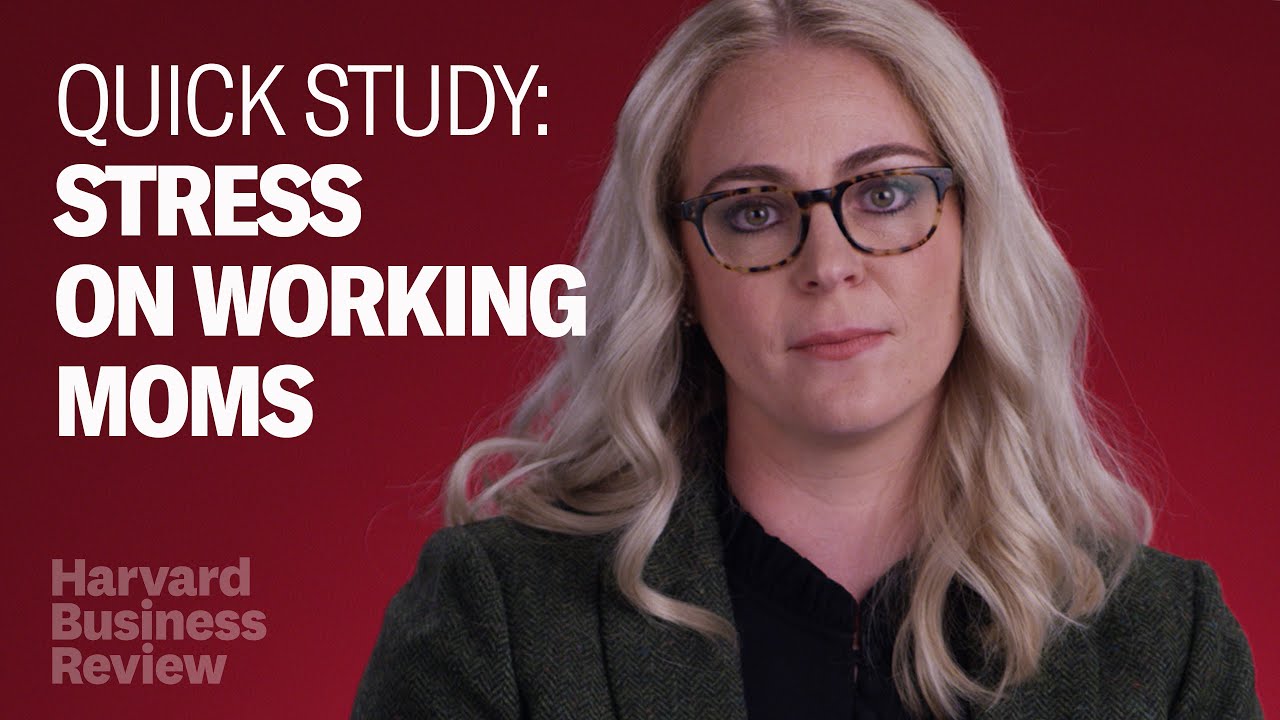
1
Think about these questions before watching. Share your ideas with a partner.
- To what extent should a government be responsible for helping citizens balance their work and family lives, versus it being a matter of personal responsibility?
- In your experience or observation, how do societal expectations for what constitutes a 'good parent' differ for mothers and fathers?
- If you were tasked with designing the 'perfect' workplace policy to support employees with families, what key elements would you absolutely have to include and why?
2
Watch the video carefully. Pay attention to the main ideas and key details.
3
Answer these questions in your own words. Support your answers with evidence from the video.
01In what ways do the parental leave policies and cultural perspectives in Sweden contrast sharply with those in the United States, as detailed in the video?
Sample answerThe contrast is enormous. The video states the US is one of only two countries with no federal paid maternity leave, while Sweden offers 480 days at 80% wage replacement. The cultural difference is highlighted by the anecdote of a Swedish mother complaining about the 20% pay cut, a sentiment the speaker finds comical given the complete lack of support in the US.
02According to the speaker, what is the underlying cultural reason that American mothers tend to internalize their work-family struggles as personal failures?
Sample answerThe speaker attributes this to the deep-seated American value of individualism and personal responsibility. Because the culture frames caregiving as a private issue, when mothers face difficulties, they're conditioned to blame themselves. They believe they could solve the problem if they were just more organized or efficient, rather than seeing it as a systemic social problem.
03How does the speaker contrast the prevailing American philosophy on caregiving with the collective consensus found in countries like Germany and Sweden?
Sample answerIn the US, the philosophy is that caregiving is a private and personal responsibility for each family to manage on its own. In contrast, countries like Germany and Sweden have reached a collective consensus that caregiving is a public responsibility. They view children as a 'public good'—future citizens and taxpayers—so the burden and cost should be shared across society.
04What practical, culture-shifting actions does the speaker propose for managers to implement, moving beyond the mere existence of family-friendly policies?
Sample answerThe speaker suggests managers should lead by example. This includes taking their own vacation and sick days, talking openly about their families at work to destigmatize it, and actively encouraging employees to use the leave they are entitled to. By doing this, they can help shift the workplace culture away from the idea that success requires a 24/7 commitment to the job.
4
Key vocabulary
Vocabulary
These expressions will help you discuss the topic of work-life balance and social policy with greater precision.
Examples
To be stretched thin — to have so many responsibilities or tasks that you lack the time or energy to handle them effectively.
Usage note: This is a common idiom to express feeling overwhelmed. For a more formal alternative, you could say someone is 'overextended' or 'under considerable strain'.
Statutory entitlement — a right to a benefit, such as paid leave or sick pay, that is guaranteed by law.
Usage note: This is a formal term used in legal, political, and HR contexts. Common collocations include 'statutory entitlement to paid leave' or 'statutory holiday entitlement'.
The mental load — the invisible, cognitive, and emotional work involved in managing a household and family, which often falls disproportionately on one person.
Usage note: This term describes the 'thinking work' of family life, like planning meals, scheduling appointments, and remembering birthdays, not just the physical tasks.
To fall through the cracks — to be overlooked or missed by a system that is supposed to provide support or care.
Usage note: This idiom is often used to criticize systemic failures. For example: 'Without a robust social safety net, many vulnerable families fall through the cracks'.
In stark contrast to — used to emphasize a very significant and obvious difference between two things.
Usage note: This is a strong, semi-formal phrase for making comparisons in arguments or essays. It's a more emphatic alternative to 'unlike' or 'in contrast with'.
5
Decide if each statement is true or false. Correct the false ones.
01The speaker observed that American mothers frequently cried during interviews, particularly when discussing their professional ambitions.
02According to the video, the United States and Papua New Guinea are unique among all countries in the world for not offering federally mandated paid maternity leave.
03The speaker explains that American mothers typically respond to their stress by seeking individual solutions, like improving their organizational skills or meal planning.
04The speaker recounts an anecdote about a Swedish mother who was dissatisfied because the country's extensive parental leave is only compensated at 50% of her regular wage.
05One piece of advice for managers is to proactively learn about their company's family-support policies so they can better inform their employees.
6
Complete the sentences with words from the box. One word is extra.
Word bank
01Between a demanding job, childcare, and household chores, many parents feel completely and are at risk of burnout.
02In many European countries, paid parental leave is a , not a perk granted at the discretion of an employer.
03Even in households that aim for equality, women often carry the majority of the , which includes planning meals, scheduling appointments, and remembering birthdays.
04Without a robust federal policy, many freelance workers fall through the when it comes to parental support.
05The generous family policies in Scandinavia stand in to the individualistic approach seen in the United States.
7
Choose the best answer based on what you heard in the video.
01What specific question frequently caused American mothers to cry during the speaker's interviews?
02According to the speaker, why are individual efforts like better organization or meal prepping ultimately ineffective for working mothers in the US?
03How does the video characterize the collective view of children in countries like Sweden and Germany?
04Which of the following is NOT recommended as a way for managers to support working parents?
8
Work-Family Dynamics
Match each item on the left with the correct item on the right.
A
B
9
Discuss these questions with a partner. Try to use vocabulary from the lesson.
- While generous statutory entitlements like Sweden's seem ideal, some argue they can create economic burdens or inadvertently reinforce traditional gender roles. To what extent do you agree that extensive state support for parents can have significant, unintended negative consequences?
- Reflecting on your own country's approach, which may stand in stark contrast to the US or Swedish models, who is most at risk of falling through the cracks? Discuss the specific pressures that leave these individuals feeling particularly stretched thin.
- The video highlights the intense mental load and feeling of failure among working mothers. Beyond the impact on individual families, what are the long-term ripple effects on a nation's economy, child development, and social cohesion when a large part of the workforce feels perpetually unsupported?